
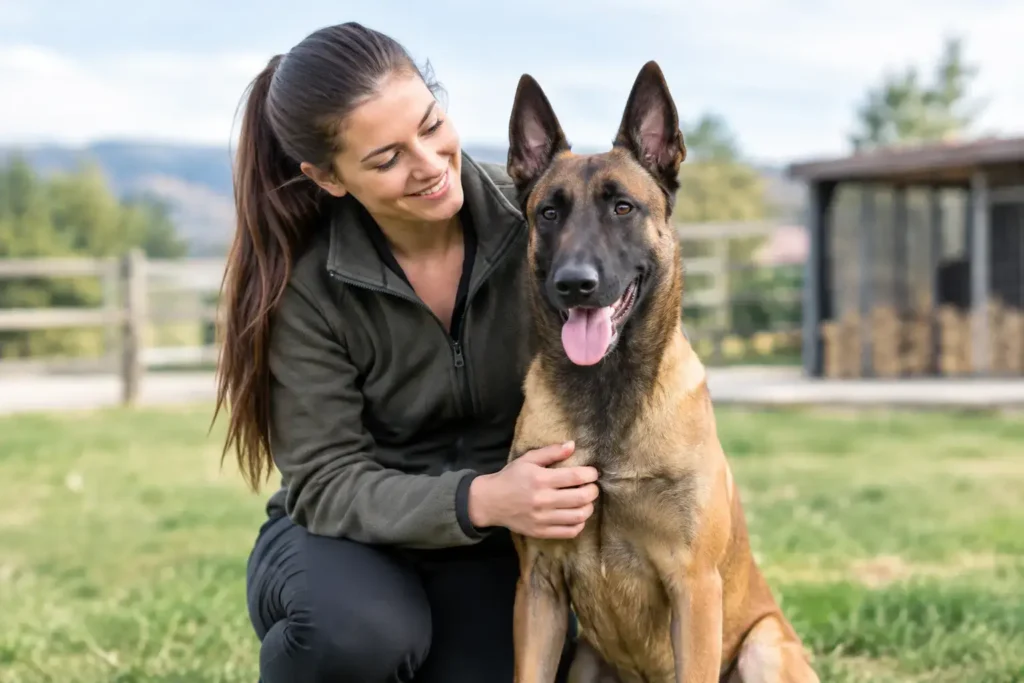
A Belgian Malinois breeder should be prepared to show you far more than appealing puppy photos. This is a breed built for attention, athletic work, fast learning, and close partnership with its handler. The right puppy can become an exceptional sport dog, working prospect, protection candidate, or active family companion. The wrong match, or a puppy raised without thoughtful foundations, can leave an owner overwhelmed by the same intensity that makes the breed remarkable.
Choosing carefully is not about finding the first available litter. It is about understanding how a breeder makes decisions before a puppy is born, how puppies are raised during their earliest weeks, and whether the breeder remains available once a puppy joins your home.
What a Responsible Belgian Malinois Breeder Documents
A serious breeding program begins with dogs that have been selected for more than appearance. Belgian Malinois should have the confidence, nerve, trainability, athletic ability, and social stability appropriate to their intended roles. Drive matters, especially for sport and working homes, but drive without clear thinking or recoverability is not the whole picture.
Ask to see the parent dogs’ AKC registration information and pedigrees. A transparent breeder can explain the bloodlines behind a litter and speak plainly about the parents’ strengths, tendencies, and the kind of home each pairing is expected to suit. Pedigree alone does not guarantee a puppy’s future, but it gives buyers useful context about the program and the dogs behind it.
Orthopedic health documentation should be equally clear. OFA hip and elbow evaluations are meaningful screening tools in a physically demanding breed. A breeder should be willing to provide the parents’ results rather than asking buyers to rely on a verbal assurance that the dogs are healthy. Health testing cannot eliminate every future concern, but documented testing reflects a commitment to reducing known risks and making responsible breeding decisions.
It is also reasonable to ask about the parents’ temperaments in everyday settings. How do they behave around familiar people? How do they recover from new environments or distractions? Are they highly social, neutral, environmentally confident, intense in work, or more reserved? Honest answers are more valuable than a promise that every puppy will be perfect for every household.
Early Raising Shapes More Than Manners
The weeks a puppy spends with its breeder are not a waiting period. They are the beginning of that dog’s education. Puppies benefit from safe, age-appropriate exposure to ordinary household sounds, people, handling, surfaces, routines, and gentle changes in their environment. This does not mean pushing puppies into stressful situations. It means giving them positive, measured experiences that help build curiosity and resilience.
A home-based program can offer valuable daily exposure when it is managed thoughtfully. Puppies raised around normal family activity, including respectful interaction with children, may have a stronger starting point for life in an active household. They still need continued socialization after they leave, but they should not arrive having known only a kennel run and littermates.
Ask a breeder how puppies are handled, where they sleep and play, and what kinds of early experiences are part of their routine. You may also ask how the breeder evaluates individual puppies before placement. A careful breeder will not treat every puppy as interchangeable. Within one litter, one puppy may be more suited to a high-drive sport home, while another may be a better fit for an experienced family that wants an active, highly trainable companion.
The Right Puppy Depends on Your Real Life
Belgian Malinois ownership is rewarding, but it is not casual. These dogs generally need structured training, meaningful physical activity, and regular mental work. A long walk may be useful, but it is rarely enough on its own for a young, intelligent Malinois. Obedience, scent work, tracking, agility, rally, protection sport, hiking, controlled play, and skill-building games can all give a dog productive outlets.
That does not mean every owner must be a professional handler or pursue competition. It does mean the household needs a plan. A puppy needs consistent rules, time with its people, appropriate boundaries, and training that develops engagement without creating unnecessary pressure. Families with children can be excellent homes when adults actively supervise interactions and make training part of the daily routine.
Be candid when speaking with a breeder. Share your prior dog experience, work schedule, living setup, training interests, children or other pets, and what you hope to do with the dog. A responsible breeder may ask direct questions because placement matters. If they suggest a different puppy, a future litter, or even a different breed, that is not a rejection. It can be evidence that they are thinking about the dog’s long-term welfare as carefully as your own.
Protection and Sport Prospects Need Clear Expectations
Many buyers are attracted to the Belgian Malinois because of the breed’s reputation in protection work. Capability is not the same as readiness. A puppy should not be expected to become a finished protection dog without quality training, maturity, genetic suitability, and skilled guidance. Early training should focus on engagement, environmental confidence, obedience, clarity, and a healthy relationship with the handler.
The same principle applies to sport homes. A puppy with strong drive may have exciting potential, but development takes time. The best breeder-buyer relationships are built around realistic goals, not guarantees that a young puppy will become a specific title holder, service dog, or protection dog.
Questions Worth Asking Before You Reserve
A breeder should welcome informed questions and answer them directly. Before leaving a deposit, discuss the parents’ AKC and OFA documentation, the puppies’ living environment, veterinary care, vaccination and deworming schedule, contract terms, and health assurance. Ask what support is available if questions arise during crate training, house training, adolescence, or the transition into more formal work.
You should also understand the pickup or delivery plan. In-person pickup gives many families an opportunity to meet the breeder and see the environment firsthand. When distance makes that impractical, reputable breeders can coordinate safe transportation options, including a flight nanny or vetted ground transport. Ask how travel is organized, what records travel with the puppy, and how the puppy’s comfort and safety are handled from departure through arrival.
Be cautious of sellers who pressure you to pay immediately, will not discuss parent health records, cannot clearly describe where puppies are raised, or always seem to have multiple litters ready for immediate shipment. Availability is not a substitute for accountability. A well-run program may have a waitlist or ask buyers to wait for the right litter and the right individual puppy.
Why Ongoing Breeder Support Matters
Bringing home a Malinois is the start of a relationship, not the end of a transaction. The first months can include normal challenges: mouthiness, crate complaints, leash skills, socialization decisions, adolescent testing of boundaries, and learning how much activity is productive versus overstimulating. A breeder who knows the lines and has a genuine interest in each placement can be a valuable source of perspective.
At Vom Momarina in Mount Horeb, Wisconsin, puppies are raised with daily human interaction in a family home, with attention to established working bloodlines, AKC registration, OFA clearances, and early socialization. That combination matters because a capable Malinois should be prepared not only for activity and training, but also for life beside its people.
The best time to evaluate a breeder is before you have fallen in love with a particular puppy. Review the documentation, ask the uncomfortable questions, and pay attention to whether the answers are specific and consistent. A well-bred Belgian Malinois deserves an owner ready to guide its energy and intelligence with purpose, patience, and a plan that lasts well beyond puppyhood.