
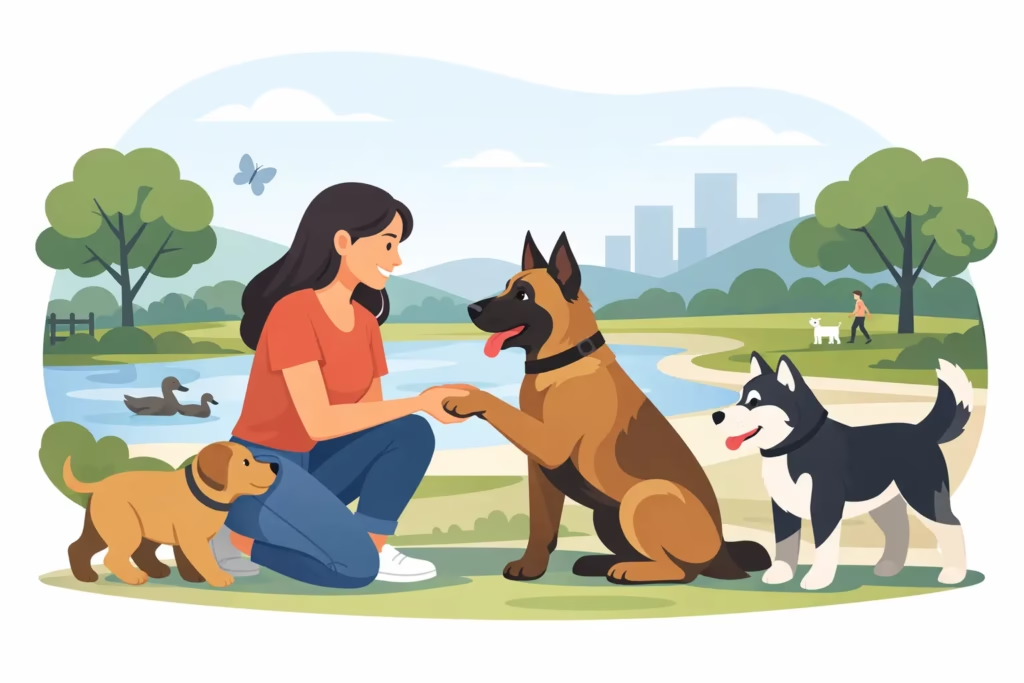
A Belgian Malinois puppy does not need to meet every person, dog, and noisy object in the neighborhood to be well prepared. Belgian Malinois early socialization is about something more valuable: teaching a naturally alert, intelligent puppy that new sights, sounds, surfaces, and people can be approached with confidence and handled calmly.
For this breed, the quality of those early experiences matters as much as the number. Belgian Malinois are quick learners with strong awareness of their environment. When early exposure is rushed, overwhelming, or poorly managed, a puppy may learn to avoid, overreact to, or become overly dependent on a handler. When it is thoughtful and consistent, socialization supports the stable nerves, engagement, and recoverability that responsible owners value.
Why Belgian Malinois Early Socialization Matters
Socialization is often mistaken for simple friendliness. A well-socialized Malinois does not have to greet every stranger or play with every dog. In fact, many mature working-breed dogs are appropriately neutral in public. The real goal is a dog that can observe the world without fear, panic, or unnecessary reactivity, then look to its handler for direction.
That foundation is especially meaningful in a high-drive breed. Belgian Malinois commonly notice movement, changes in body language, unfamiliar sounds, and environmental pressure before many other dogs do. A puppy that learns early to recover from a dropped object, walk across an unfamiliar floor, or calmly watch a busy parking lot has a better starting point for family life, obedience, sport work, and many working-dog paths.
Early socialization also helps reveal individual temperament. Puppies from the same litter can differ in confidence, food motivation, persistence, sensitivity, and interest in people. Responsible breeders use daily observation and age-appropriate experiences to understand those differences. That information helps support better placement decisions rather than treating every puppy as an identical prospect.
Socialization Starts With the Breeder
A puppy’s earliest learning happens before it goes home. From birth through approximately eight weeks, puppies are absorbing information through handling, litter interaction, movement, sound, and routine. Genetics matter greatly, which is why health-focused breeding and stable, capable parent dogs should be the starting point. But good genetics are not a substitute for responsible early development.
At Black Rose Malinois, early development is treated as part of preparing a puppy for the right home. Puppies benefit from regular, calm handling and carefully introduced everyday experiences that are appropriate for their developmental stage. The objective is not to pressure puppies into performing. It is to build positive associations and confidence while allowing each puppy to process new information at a manageable pace.
Appropriate breeder-led exposure may include different safe surfaces, household sounds, gentle grooming, brief crate introduction, supervised play, varied objects, and positive interaction with trusted people. Short sessions are usually more productive than long, chaotic ones. A confident puppy may investigate quickly, while a more thoughtful puppy may need time and distance before choosing to engage. Both responses provide useful information.
Cleanliness and health protection remain essential. Young puppies are vulnerable before their vaccine series is complete, so early socialization should never mean unnecessary exposure to unknown dogs, high-traffic dog areas, or unsanitary environments. A reputable breeder balances development with disease prevention rather than treating socialization as an excuse to take avoidable risks.
The First Weeks at Home Set the Pattern
The transition home is exciting, but it is also a major change for a puppy. New rooms, new voices, a new schedule, and separation from littermates can be tiring. Give your puppy a calm landing period while beginning a consistent routine for meals, sleep, potty breaks, handling, and short training sessions.
Your first goal is relationship, not intensity. A Belgian Malinois puppy should learn that you are predictable, fair, and worth engaging with. Reward voluntary check-ins, calm behavior, and curiosity. Use food, a toy, praise, or access to something the puppy wants, depending on what motivates that individual dog.
Socialization should continue in small, deliberate steps. Let the puppy see delivery trucks from a safe distance, hear the vacuum briefly, walk over rubber mats and concrete, ride in the vehicle, and meet a few calm, dog-savvy visitors. If the puppy looks concerned, do not drag it closer or repeatedly insist that it interact. Increase distance, allow observation, and reward relaxed choices.
The right amount of exposure depends on the puppy. A bold puppy may need help learning patience and neutrality, while a more environmentally sensitive puppy may need slower introductions and more recovery time. Pushing either puppy too hard can create problems that look like stubbornness but are actually stress.
Focus on Recovery, Not Fearlessness
No puppy will be perfectly confident about every unfamiliar experience. What matters is how the puppy recovers. A sudden sound may cause a brief startle. That is normal. A healthy response is for the puppy to orient, investigate or check in with the handler, and return to normal behavior.
Avoid trying to prove that your puppy is brave. Flooding a puppy with crowds, loud events, uncontrolled dog greetings, or prolonged exposure to frightening situations can damage trust. Confidence grows when a puppy learns, repeatedly, that new things are manageable and that its handler provides clear guidance.
Safe Socialization Around People and Dogs
Meeting people should be intentional. Choose adults and children who can follow instructions, remain calm, and let the puppy approach at its own pace. Ask visitors not to loom over the puppy, grab its head, or encourage frantic jumping. Gentle handling of paws, ears, collar, and body should be paired with rewards so future grooming and veterinary care are easier.
Children and Malinois can be a good match in the right household, but supervision is nonnegotiable. Puppies are not small adults. They can become overtired, mouthy, and overstimulated quickly. Teach children to avoid chasing, wrestling, hugging, or disturbing a puppy while eating or resting. Give the puppy a quiet crate or designated rest area where it is never bothered.
Dog socialization requires equal care. Puppy classes led by qualified trainers can be useful after discussing vaccine timing with your veterinarian, but free-for-all play is not necessary and is often counterproductive. Your Malinois does not need a large circle of dog friends. Calm exposure to stable, vaccinated dogs and the ability to disengage on cue are far more useful than uncontrolled excitement.
Watch for signs that a session has become too much: persistent avoidance, tucked posture, repeated yawning when not tired, frantic biting, inability to take food, prolonged barking, or escalating intensity. End on an easier note and give the puppy time to rest. Sleep is part of development, not lost training time.
Pair Socialization With Training and Structure
For a Belgian Malinois, socialization works best alongside early training. Name recognition, recall games, leash introduction, crate comfort, place work, and settling quietly near the family all help a puppy develop self-control. These skills do not require harsh corrections. They require consistency, clear expectations, and rewards that matter to the puppy.
Short training sessions are enough at this age. A few minutes of engaged work, followed by rest or play, creates a stronger learning experience than drilling a tired puppy. Be mindful of physical development as well. Avoid repetitive high-impact exercise, forced runs, and intense jumping while joints and coordination are still maturing.
A good routine includes activity, learning, downtime, and calm observation. Many new owners focus heavily on tiring out a Malinois puppy. That approach can create an athlete with no off switch. Instead, teach the puppy that quiet behavior is also rewarding. A dog that can settle at home is better prepared to handle the demands of an active family, sport training, or a structured working environment.
Choosing the Right Support
The best socialization plan cannot compensate for a home that is not ready for the breed’s intensity. Belgian Malinois thrive with owners who provide daily engagement, training, physical outlets, and thoughtful management. They are not typically a fit for buyers seeking a low-maintenance pet or a dog that can be left to entertain itself.
Before bringing home a puppy, consider your schedule, training experience, household activity level, and long-term goals. Be honest about whether you want a family companion with advanced obedience, a sport prospect, or a dog with serious working potential. Clear communication with the breeder supports a more appropriate match and gives you a better plan for the first months.
A qualified trainer with working-breed experience can also be valuable, particularly if you are new to Malinois. Look for someone who understands motivation, arousal, environmental sensitivity, and the importance of building engagement without creating conflict. Early guidance is far easier than waiting for avoidable habits to become established.
The strongest early socialization is rarely dramatic. It is a steady pattern of safe experiences, thoughtful boundaries, enough rest, and a handler who teaches the puppy that the world is interesting but not overwhelming. That patient work gives a Belgian Malinois room to grow into the clear-headed, capable companion it has the potential to become.