
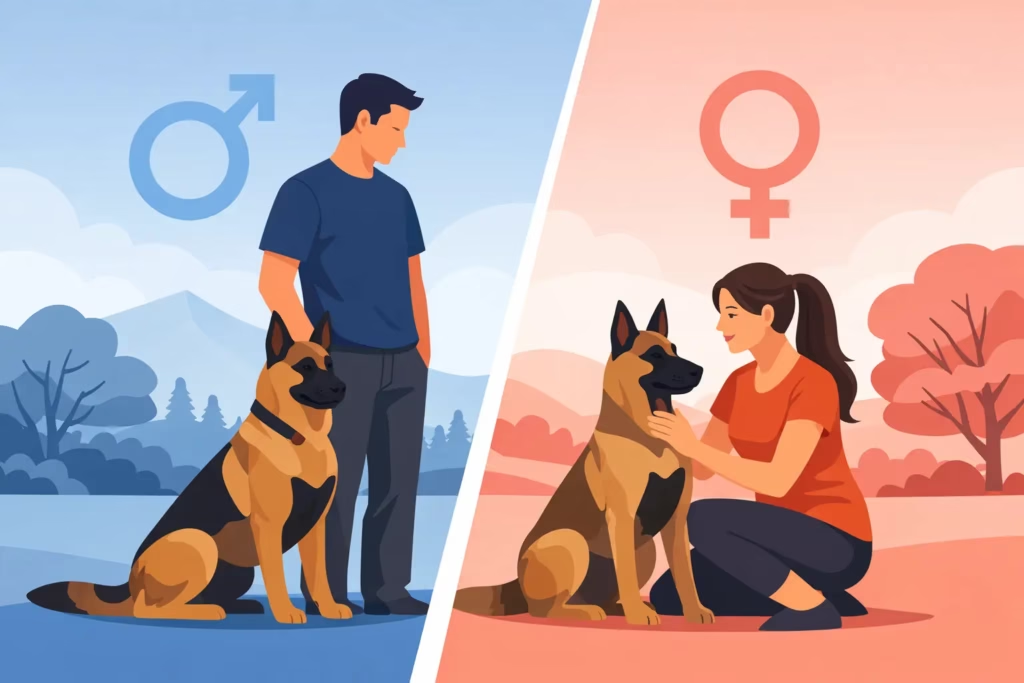
A Belgian Malinois is not a casual choice, and sex alone will not tell you whether a puppy is right for your home. When comparing a male vs female Belgian Malinois, the more useful question is this: which individual puppy has the temperament, energy level, structure, and working potential that match your experience and plans?
Male and female Malinois can both become exceptional companions, sport dogs, working partners, and loyal family dogs in the right environment. Both also need consistent training, meaningful daily activity, clear boundaries, and thoughtful socialization. The differences between the sexes can be real, but they are tendencies, not guarantees.
At Black Rose Malinois, responsible placement begins with evaluating the whole puppy. Health-focused breeding, AKC-registered lineage, early handling, socialization, and breeder insight matter far more than choosing a puppy strictly because it is male or female.
Male vs Female Belgian Malinois: The Main Differences
The most noticeable difference is usually physical size. Male Belgian Malinois are commonly larger, heavier, and more substantial in bone than females. A mature male may feel more powerful on leash, take up more space in the home or vehicle, and require more physical control during adolescence. For an experienced handler seeking a larger dog for demanding sport or working goals, that added presence may be appealing.
Females are often slightly smaller and more refined in build. Many owners find them easier to manage physically, especially during training, travel, and everyday handling. That does not mean a female is automatically less intense. A smaller female Malinois can have tremendous drive, speed, confidence, and athletic ability.
Temperament is more complicated than size. Some males are outwardly social, playful, and expressive well into adulthood. Some females mature earlier, show more environmental awareness, or develop a more independent decision-making style. Yet there are highly affectionate, easygoing females and serious, focused males. A well-bred Malinois should have the nerves, confidence, and stability appropriate to its intended role, regardless of sex.
Temperament Matters More Than Gender
Belgian Malinois are intelligent, observant dogs bred to work closely with people. Within any litter, you may see puppies with different levels of food motivation, toy drive, confidence, sensitivity, persistence, social interest, and recovery from new experiences. Those qualities affect daily life more directly than whether the puppy is male or female.
For example, an active family may do best with a puppy that is confident and engaged but able to settle after structured exercise and training. A sport home may want stronger toy possession, intensity, and a fast return to task. An experienced working-dog handler may prioritize nerve strength, environmental confidence, clear-headedness, and trainability under pressure.
A responsible breeder watches these traits from the earliest weeks. Daily handling and age-appropriate socialization help reveal how each puppy responds to people, novelty, movement, surfaces, and gentle challenges. This gives the breeder valuable information for matching puppies to homes instead of allowing appearance or sex to make the entire decision.
Maturity and Training Style
Females are sometimes described as maturing faster, while males are often said to remain more puppy-like for longer. There can be truth in that observation, but it should be treated carefully. Development depends on genetics, the puppy’s individual temperament, training consistency, nutrition, activity, and the home environment.
A female that appears focused at a young age still needs patient training and time to develop. A young male with a goofy, social personality can mature into a serious, reliable adult with good guidance. Neither sex should be expected to train itself or naturally fit into a busy household without structure.
The best Malinois training is clear, fair, and ongoing. These dogs thrive when their owners give them a job, whether that means obedience work, scent work, agility, protection sports with qualified instruction, hiking, structured play, or advanced engagement training. A bored Malinois of either sex can create problems quickly.
Choosing for Family Life, Sport, or Work
Your lifestyle should guide the decision. A male may be a strong fit for an owner who wants a larger, more physically imposing dog and has the skill to manage that size and strength. Some male Malinois are especially affectionate and enthusiastic with their people, which can be a wonderful trait in an active home that values close engagement.
A female may be appealing for owners who prefer a more compact dog without giving up athleticism or drive. In sports such as obedience, agility, scent work, and rally, many females excel because they are quick, responsive, and highly motivated. In working roles, females can be every bit as capable as males when they have the right genetics, structure, confidence, and training.
For a family with children, neither sex is automatically the safer choice. The right dog is one with an appropriate temperament, reliable socialization, and owners who supervise interactions, teach children respectful behavior, and provide consistent outlets for the dog. Belgian Malinois are not a breed to leave to entertain themselves in the backyard or to expect to tolerate chaotic handling.
A home with another dog also deserves careful consideration. Same-sex conflict can occur in many breeds, including the Belgian Malinois, particularly as dogs reach social maturity. A male-female pairing is often simpler for some households, but individual personalities, management, training, and introductions still matter. An ethical breeder should ask about the dogs already in your home and help assess the best placement.
Practical Considerations for Males and Females
Female owners should plan for heat cycles if the dog is not spayed. Heat typically occurs about twice a year, although timing varies by individual. During that period, careful supervision is necessary to prevent accidental breeding, and some owners adjust training or travel plans around their dog’s cycle.
Male owners do not manage heat cycles, but intact males can be highly aware of nearby females in season. This may affect focus, behavior, and management in certain settings. Training remains essential, and intact status should never be treated as an excuse for poor manners or unreliable handling.
Spay and neuter decisions should be discussed with a veterinarian who understands your dog’s health, lifestyle, growth, and long-term needs. There is no one-size-fits-all timeline for an active, athletic breed. Responsible owners weigh veterinary guidance alongside behavior, orthopedic development, breeding ethics, and their ability to manage an intact dog appropriately.
Grooming needs are similar for both sexes. Belgian Malinois have a short, weather-resistant double coat that sheds year-round and more heavily during seasonal coat changes. Routine brushing, nail care, dental care, quality nutrition, and regular veterinary care support every Malinois, male or female.
What to Ask a Belgian Malinois Breeder
If a breeder asks only whether you want a boy or a girl, the placement conversation is incomplete. A reputable breeder should want to understand your dog experience, household routine, training goals, activity level, other pets, children, and expectations for the dog.
Ask how the parent dogs were selected and what health evaluations have been completed. Ask about the parents’ temperaments, working ability, structure, and how they behave in everyday settings. AKC registration and documented lineage provide useful accountability, while health-conscious decisions and honest breeder communication help protect the puppy’s long-term future.
It is also reasonable to ask how puppies are raised, handled, and introduced to appropriate new experiences before going home. Early development does not replace training, but it gives a puppy an important foundation. The breeder who knows each puppy well can often identify whether a particular male or female is likely to suit your goals.
Let the Best Puppy Be the Deciding Factor
It is fine to have a preference. Maybe you have owned females before and enjoy their size and focus. Maybe you want a male because you prefer a larger dog or have had a successful male-female household pairing. Preferences are useful starting points.
They should not outweigh a strong breeder recommendation based on individual fit. The confident, stable, trainable puppy that suits your household may be the opposite sex of the one you first imagined. That is not a compromise. It is responsible placement.
The right Belgian Malinois is one whose needs you are prepared to meet for life. Choose the puppy with sound breeding, appropriate temperament, and the guidance to grow into the capable partner you are looking for.