
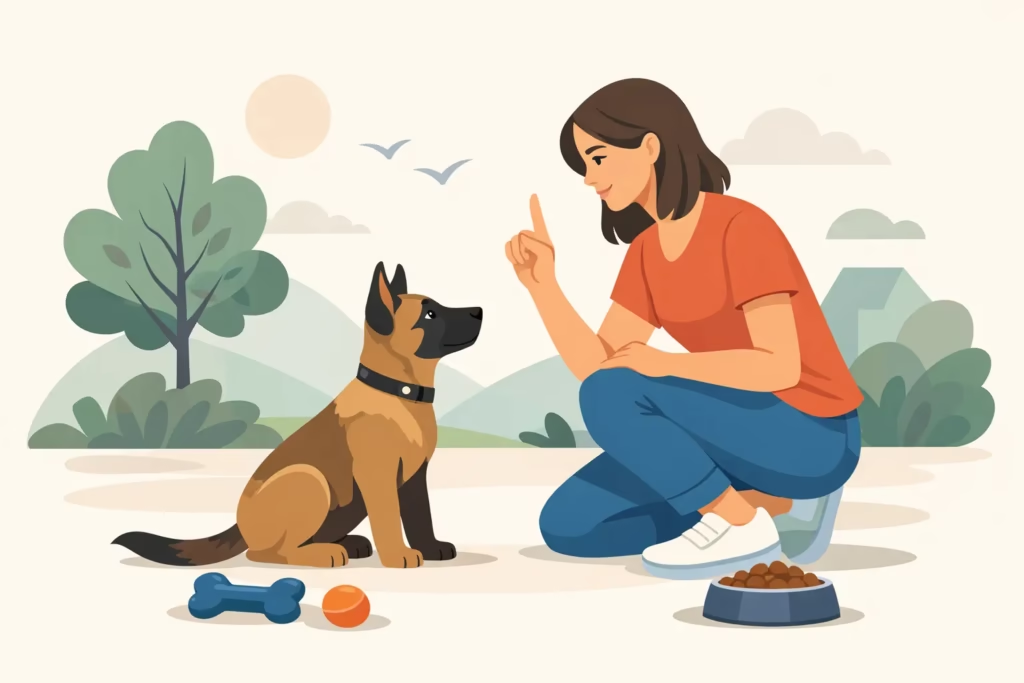
A Belgian Malinois puppy can learn quickly, bond deeply, and notice every change in the environment. That sensitivity is part of what makes the breed so capable. It is also why learning how to raise a confident Malinois puppy is not about making the puppy bold through constant stimulation. It is about building trust, clarity, and recovery skills from the first day home.
Confidence in a Malinois should look calm and purposeful. A confident puppy can investigate a new surface, hear an unfamiliar sound, meet a new person appropriately, and return to the handler for direction. Confidence is not reckless behavior, nonstop intensity, or a puppy that rushes into every situation without thinking.
Start With the Right Foundation
A puppy’s early environment matters, but genetics matter too. Responsible breeding considers temperament alongside structure, health evaluations, trainability, and working potential. Puppies from stable, carefully selected parent dogs have a stronger foundation for developing sound confidence, although every individual puppy still needs thoughtful raising and training.
Before bringing home a Malinois, be honest about the household’s readiness. This breed needs daily engagement, clear boundaries, appropriate exercise, and training that continues well beyond puppyhood. A busy household can be an excellent fit when adults are consistent and children are taught how to interact respectfully. A home with unpredictable routines, little time for training, or no plan for managing a high-drive adolescent may not be the right placement.
A breeder-guided placement process helps match the puppy’s personality and drive to the home. Some puppies may be better suited for an active family focused on obedience and companionship, while others may thrive with experienced sport or working-dog handlers. The goal is not to choose the most intense puppy. It is to choose the puppy whose temperament fits the life you can provide.
How to Raise a Confident Malinois Puppy at Home
The first weeks should be structured, not overwhelming. Give your puppy a predictable routine for meals, potty breaks, rest, training, and calm family time. Predictability reduces stress and teaches the puppy that people provide guidance instead of chaos.
Set up a quiet rest area, such as a crate or puppy-safe pen, before the puppy arrives. Crate training should be introduced as a positive skill, never as punishment. Feed meals nearby, offer a safe chew, and allow the puppy to settle for short periods while you remain close. A Malinois that learns to rest is often easier to train and more capable of handling new experiences.
Use management early. Keep the puppy supervised, prevent rehearsals of unwanted behaviors, and avoid giving too much freedom before the puppy has earned it. If your puppy repeatedly chases the cat, grabs clothing, or barks at every window sound, the behavior becomes stronger with practice. Redirecting and managing the environment is more productive than waiting for a problem to become a habit.
Clear rules should apply to every person in the home. Decide where the puppy sleeps, which rooms are available, how greetings happen, and what behaviors earn attention. Mixed messages can create frustration in a highly observant dog. Consistency does not mean harshness. It means the puppy can understand what is expected and succeed often.
Socialization Means Positive Exposure, Not Pressure
Socialization is one of the most misunderstood parts of raising a Belgian Malinois. It does not mean allowing every stranger to touch your puppy or taking the puppy into crowded places for hours. It means introducing the puppy to the sights, sounds, surfaces, people, dogs, and everyday situations they may encounter while keeping the experience safe and manageable.
Begin with short, positive outings. Let the puppy see traffic from a comfortable distance, walk across rubber mats or gravel, watch people carrying umbrellas, and hear household noises. Pair new experiences with praise, food, or play when the puppy remains comfortable. If the puppy hesitates, give space. Allow observation before asking for interaction.
Watch the puppy’s body language. Loose movement, curiosity, normal eating, and a willingness to engage are good signs. Repeated avoidance, tucked posture, frantic pulling away, refusal of food, or prolonged recovery after a surprise means the situation may be too difficult. Move farther away, reduce the duration, and try again at a level where the puppy can succeed.
Meet stable, appropriately vaccinated dogs that have good social skills. Puppy play should be supervised and balanced. A larger or pushier dog can intimidate a young Malinois, while uncontrolled dog-park environments can create bad habits and unnecessary health risks. The puppy does not need to greet every dog. Learning to remain neutral around other dogs is often more valuable.
At Black Rose Malinois, early handling and socialization are part of preparing puppies for their future homes, but new owners carry that work forward. The transition home is a critical period for building upon those early experiences with patience and structure.
Train Engagement Before You Need Control
A confident Malinois looks to the handler for information. That relationship starts with simple engagement games. Say the puppy’s name once, reward eye contact, and make yourself worth choosing. Practice a cheerful recall in a safe area, reward generously, and avoid calling the puppy only when fun is ending.
Short training sessions are more effective than long drills. Two to five minutes of focused work, repeated throughout the day, can teach more than a single extended session that leaves the puppy tired or frustrated. Begin with practical skills: name response, recall, sit, down, leash pressure, place, and settling quietly.
Use rewards that matter to the puppy. Food works well for many puppies, while others become highly motivated by a toy, movement, or a chance to chase a flirt pole used appropriately. Reward-based training does not mean there are no boundaries. It means the puppy learns what behavior earns access to good things, while the handler calmly interrupts and redirects unsafe or inappropriate choices.
Avoid trying to build confidence through intimidation, excessive corrections, or confrontational handling. A Malinois may appear compliant under pressure while becoming less secure, more defensive, or less willing to offer behavior. Fair training creates a dog that works with the handler because the expectations are clear.
Build Environmental Confidence in Small Steps
New objects and surfaces can be useful training opportunities when introduced thoughtfully. Let the puppy explore a low platform, a wobble board designed for puppies, a different stair surface, or a parked vehicle. Keep sessions brief and do not lure the puppy into something that causes panic. Curiosity should be encouraged, but the puppy should have room to process.
Car rides deserve special attention. Start with calm, short trips and make the vehicle a normal part of life before long travel is necessary. Secure the puppy safely, keep the temperature comfortable, and avoid turning every ride into an exciting destination. A puppy that can relax in the car is easier to include in training, family routines, and future travel.
Confidence also comes from recovery. A dropped pan, a sudden truck noise, or a new person wearing a hat may startle any puppy. Do not rush to soothe every minor surprise in a way that communicates danger. Remain calm, create distance if needed, and allow the puppy to investigate when ready. Your steady response teaches the puppy that unexpected moments are manageable.
Meet Drive Needs Without Creating Chaos
Belgian Malinois puppies need activity, but more exercise is not always the answer. Endless ball throwing, forced runs, and repetitive high-arousal games can create an athlete that never learns an off switch. Growing joints also need protection, so intense impact and long-distance exercise are not appropriate for a young puppy.
Choose purposeful outlets instead. Food puzzles, scent games, short obedience sessions, supervised exploration, tug with clear rules, and age-appropriate play build the puppy’s mind as well as body. Finish exciting activities with a calm transition, such as a drink of water, a short leash walk, or time in the crate with a safe chew.
Teach the puppy that activity has a beginning and an end. Ask for a simple sit before releasing to play. Trade the toy instead of chasing the puppy for it. End a game while the puppy is still eager, then reward calm behavior. These small routines help shape impulse control without dulling the breed’s natural enthusiasm.
Protect Health, Sleep, and Emotional Development
A tired, uncomfortable, or overstimulated puppy cannot learn well. Young Malinois need significant sleep, often 18 to 20 hours in a 24-hour period. Many apparent behavior problems, including biting, zooming, and poor focus, are signs that the puppy needs a nap rather than a harder training session.
Maintain veterinary care, age-appropriate vaccination guidance, parasite prevention, and a quality diet recommended for the puppy’s developmental needs. Ask your breeder and veterinarian about feeding, growth, and safe activity levels. Health-conscious breeding decisions and documented parent information provide an important starting point, but ongoing care protects that investment.
If a puppy shows persistent fear, sudden behavior changes, escalating reactivity, or difficulty recovering from ordinary experiences, seek qualified professional help early. A knowledgeable trainer who understands working breeds can assess the situation and help you create a realistic plan. Waiting for adolescence to “fix” fear or poor impulse control usually makes the work harder.
The confident Malinois is not the puppy pushed to perform before it is ready. It is the dog raised by a patient handler who provides security, purpose, fair boundaries, and room to grow into its potential.