
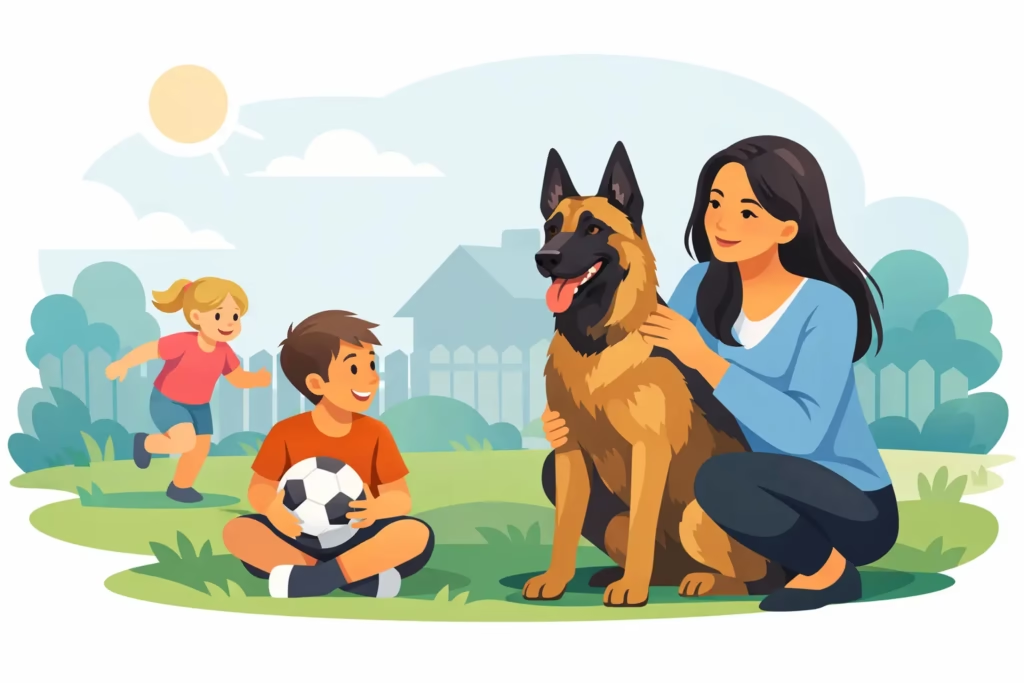
A Belgian Malinois may be gentle, loyal, and deeply bonded to its family, but this is not a breed that should be expected to simply “fit in” without direction. Can Belgian Malinois live with children? Yes, in the right home, with the right dog, clear adult leadership, structured training, and consistent supervision. The more useful question is whether the family is ready for the daily responsibility that comes with a highly intelligent, high-drive working breed.
Belgian Malinois are often described as alert, athletic, and eager to work. Those qualities can make them exceptional companions for active, hands-on families. They can also create challenges when a dog is under-exercised, poorly socialized, or allowed to rehearse overly intense behavior around running, shouting, or rough play. Responsible placement matters because no puppy, regardless of breed, comes with a guarantee of being the right fit for every household.
Can Belgian Malinois Live With Children? It Depends on the Home
A well-bred, properly raised Belgian Malinois can thrive with respectful children. Many develop close, protective, affectionate relationships with the people in their household. However, a Malinois is not usually the best choice for a family looking for a low-maintenance dog that will be content with a short walk and occasional backyard play.
This breed needs daily physical exercise, mental work, and training that gives its energy a productive outlet. A bored Malinois may become vocal, destructive, overly watchful, or too intense during play. In homes with children, those behaviors can become more difficult to manage because children naturally move quickly, make noise, invite friends over, and may not recognize early signs that a dog needs space.
The best family match is usually one where adults genuinely enjoy training and have the time to make it part of everyday life. That may include obedience practice, structured walks, scent work, retrieving, agility foundations, or other activities that engage the dog’s mind. Children can participate in age-appropriate ways, but the adults must remain responsible for the dog’s management and training plan.
Temperament and Breeding Make a Meaningful Difference
Not every Belgian Malinois has the same level of drive, confidence, sociability, or environmental sensitivity. A responsible breeder evaluates parent dogs for more than appearance. Health, structure, stable temperament, trainability, confidence, and working characteristics all matter when planning a litter.
For a family with children, a breeder should be willing to discuss the parents honestly and ask direct questions about the household. The age of the children, the family’s dog experience, daily schedule, activity level, and training goals all help determine whether a particular puppy is an appropriate fit. The most intense puppy in a litter may be an excellent prospect for sport or working pursuits, while another puppy may be better suited to an active family committed to training.
AKC registration and documented lineage offer important information about a puppy’s background, but registration alone does not define temperament. Families should look for breeders who use health-focused breeding decisions, provide early handling and socialization, and prioritize responsible placement over a quick sale. At Black Rose Malinois, the goal is to help prospective owners understand the breed and choose a puppy whose potential aligns with the home being offered.
Early Socialization Is Not the Same as Constant Exposure
Socialization is often misunderstood as allowing a puppy to meet every person, dog, and busy environment possible. For a Belgian Malinois, thoughtful socialization is more valuable than overwhelming exposure. The puppy should learn that new sights, sounds, surfaces, people, and everyday household activity can be approached calmly and confidently.
Children should be part of that process, but the interactions need to be structured. A puppy benefits from quiet, positive experiences with children who can follow instructions, rather than chaotic handling or unrestricted play. The objective is not to make the puppy tolerate anything a child does. The objective is to build good associations while teaching both dog and child respectful boundaries.
Puppies also need rest. Young Malinois can become mouthy, overexcited, or difficult to redirect when they are overtired or overstimulated. A crate, exercise pen, or quiet puppy area gives the dog a reliable place to decompress. It also prevents the common mistake of expecting a young puppy to remain involved in family activity all day.
Supervision Protects Both the Dog and the Child
No dog should be left alone with an infant, toddler, or young child, including a familiar family dog with an excellent history. Supervision does not mean being somewhere nearby while attention is focused on a phone, cooking, or another task. It means an adult is actively present and able to interrupt, redirect, or separate the dog and child before excitement escalates.
This is especially relevant during high-energy moments. Running games, wrestling, squealing, bikes, scooters, visitors, and backyard play can trigger chasing or herding-style behavior in a dog that has not yet learned impulse control. A Belgian Malinois does not need to be aggressive for that behavior to be unsafe. A fast, athletic dog can accidentally knock over or frighten a child simply by becoming too engaged.
Children should learn simple, consistent rules: do not climb on the dog, hug tightly around the neck, pull ears or tail, disturb the dog while eating or sleeping, take toys away, or corner the dog in a crate. They should also understand that a dog walking away is communicating a need for space. Respecting that choice helps prevent conflict.
Training Should Start Before Problems Appear
A Malinois puppy should begin learning household rules from the first day home. Basic skills such as name recognition, recall, leash manners, sit, down, place, leave it, drop it, and settling on a mat are practical family tools, not just obedience exercises. A reliable “place” cue, for example, is useful when children have friends visiting or when the family needs to manage a busy doorway.
Mouthing requires early, calm attention. Belgian Malinois puppies commonly use their mouths during play, and their enthusiasm can be more intense than many first-time owners expect. Adults should redirect the puppy to appropriate toys, end play briefly when teeth touch skin or clothing, and reward calm engagement. Avoid encouraging hand wrestling or games that make biting at moving body parts seem acceptable.
Professional training can be a wise investment, particularly for owners new to the breed. Choose a trainer who understands working dogs and uses clear, fair, age-appropriate methods. The goal is not to suppress the Malinois personality. It is to give the dog self-control, confidence, and a clear understanding of how to behave around family life.
Consider the Children’s Ages and the Family’s Routine
Families with older, dog-savvy children often have an easier time involving everyone in training and exercise. Older children may help with structured games, supervised obedience practice, grooming, and calm leash work. Even then, adults should handle the more demanding training decisions and maintain consistency.
Homes with toddlers or multiple very young children require more management. That does not automatically rule out a Belgian Malinois, but it raises the standard for readiness. Parents need a realistic plan for gates, crates, separate play areas, exercise, and one-on-one training time. If the household is already stretched thin, waiting until the children are older or choosing a lower-intensity breed may be the more responsible decision.
A family should also consider what happens after the exciting puppy stage. Belgian Malinois commonly remain active, smart, and engaged well into adulthood. The commitment is measured in years, not weekends. The dog will need structure when school schedules change, sports seasons begin, guests arrive, and family routines become busy.
Signs a Family May Be Ready for a Malinois
The right home is not defined by having a large yard alone. A yard is useful, but it does not replace training, relationship-building, or purposeful exercise. Families who succeed with this breed tend to have adults who are consistent, active, open to coaching, and prepared to make the dog part of their daily routine.
They also understand that management is not failure. Using a crate during a child’s playdate, putting the dog on place during dinner, or separating the dog from a chaotic activity is good judgment. These choices protect the relationship between dog and children while the dog learns appropriate behavior.
A Belgian Malinois can become an extraordinary family companion when its intelligence and drive are respected rather than underestimated. Choose a puppy based on honest temperament matching, begin training early, create calm boundaries for children and dog alike, and give the relationship time to grow through consistent daily guidance.