
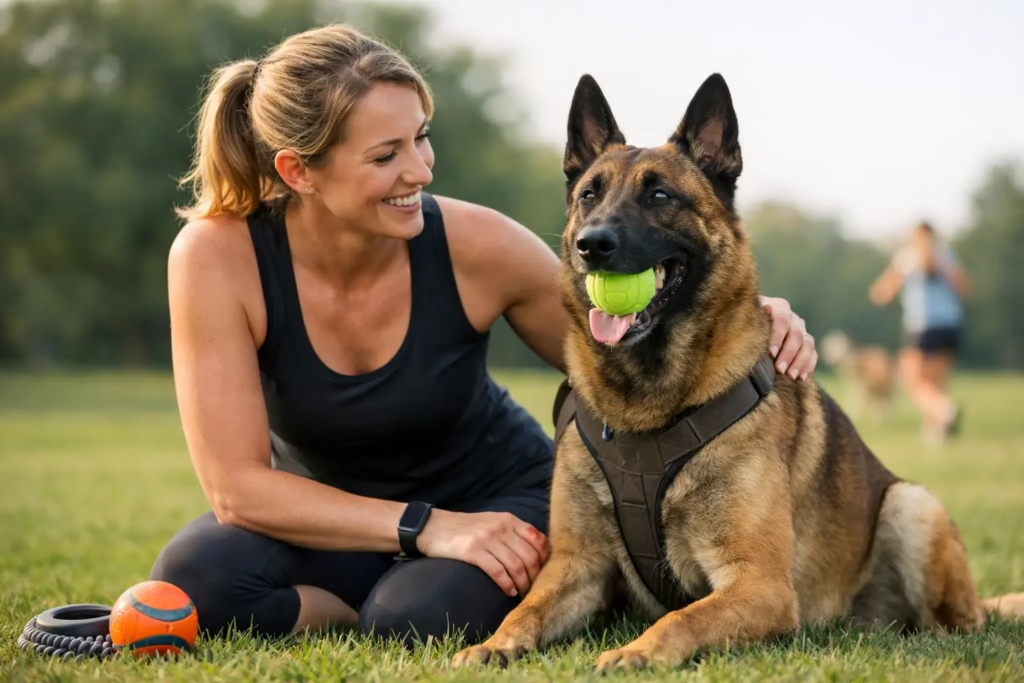
A Belgian Malinois that has spent an hour running can still be ready for more if running is the only outlet it knows. That is why prospective owners often ask, do Belgian Malinois need constant exercise? The honest answer is no. They need consistent, purposeful activity, clear training, mental work, and the ability to settle when the day is done.
This breed was developed for demanding work alongside people. A healthy Malinois typically has more drive, stamina, and awareness than the average companion dog. Meeting those needs is not about keeping the dog physically exhausted from morning until night. It is about building a routine that gives the dog a job, teaches self-control, and fits the household that brought it home.
Do Belgian Malinois Need Constant Exercise Every Day?
Belgian Malinois do not need nonstop exercise, and trying to provide it can create a dog with even greater endurance and no off switch. They do need daily engagement. For most adult Malinois, that means a combination of physical conditioning, structured training, play with rules, mental challenges, and calm downtime.
A casual walk around the block is rarely enough for a healthy, mature Malinois. At the same time, several hours of uncontrolled fetch or frantic running is not a complete plan. Repetitive high-impact activity can place unnecessary strain on joints, especially in young dogs, while teaching a high-drive dog to expect constant stimulation.
The goal is a dog that can work with enthusiasm and rest with confidence. That balance is one of the most valuable traits a responsible owner can develop.
Exercise Is Only One Part of the Equation
A Malinois uses its body and its mind. Physical exercise helps maintain muscle, coordination, cardiovascular health, and a healthy weight. Training and problem-solving provide the direction that many driven dogs need to feel fulfilled.
For example, a brisk hike, controlled jog, or structured game of tug may satisfy physical energy. A short obedience session that asks for heel position, recalls, place work, impulse control, and a calm release can be more mentally demanding than a much longer walk. Scent work, tracking foundations, agility, sport obedience, and task-based training are also productive outlets when introduced appropriately.
The best activity is not always the hardest one. It is the activity that matches the individual dog’s age, physical condition, temperament, training level, and purpose. A confident working prospect may thrive with advanced skill development, while an active family companion may be best served by daily obedience, hiking, supervised play, and structured household routines.
Why an Off Switch Matters
A Malinois should learn that activity has a beginning and an end. Without that lesson, some dogs become restless, vocal, destructive, or demanding whenever the household is quiet. This is not proof that the dog needs another five-mile run. Often, it means the dog has not been taught how to settle.
Place training, crate training, calm leash handling, and rewarding relaxed behavior can all help establish an off switch. Owners should intentionally schedule quiet periods after exercise and training rather than responding to every request for attention with more excitement. A dog that can lie down calmly while its people work, eat, or visit with guests is not underworked. It is well educated.
What a Healthy Daily Routine Can Look Like
An adult Belgian Malinois often does well with one or two purposeful activity periods each day, supported by brief training throughout the day. The exact duration varies. A conditioned adult in sport or working training may need substantially more physical and mental output than a companion Malinois living with an active family.
A practical routine might include a morning walk or conditioning session with focused leash work, followed by a short obedience or scent exercise. Later in the day, the dog may have a hike, supervised tug session, training class, or another task-based activity. Between those sessions, the dog should have opportunities to rest, chew appropriately, and practice calm behavior in the home.
Quality matters more than chasing a fixed number of minutes. Thirty focused minutes that include heeling, recall practice, tug rules, and a calm finish can be more productive than an hour of wandering on a retractable leash. Likewise, a long weekend adventure does not replace consistent weekday structure.
Watch the dog in front of you. A routine may need adjustment if your Malinois is persistently pacing, unable to relax, chewing household items, reacting excessively, or creating its own entertainment. But increase structure and training before assuming the answer is simply more physical exertion.
Puppies Need Activity, Not Adult Workouts
Belgian Malinois puppies are energetic, curious, and quick to learn, but their bodies are still developing. They should not be conditioned like adult dogs. Long forced runs, repetitive jumping, intense stair work, and prolonged impact exercise are poor choices for growing puppies.
Instead, puppy exercise should center on free movement, exploration on safe surfaces, age-appropriate play, short training sessions, confidence-building outings, and carefully managed socialization. A young puppy may benefit more from learning to walk calmly through a new environment, meet appropriate people, ride quietly in the car, and settle in a crate than from being physically worn down.
Puppyhood is also the right time to build engagement without creating frantic behavior. Short food-based training, play with clear start and stop cues, recall games, handling exercises, and introductory obedience create a foundation for future work. Rest is essential, too. Overtired puppies can look hyperactive, mouthy, and difficult when what they actually need is a nap.
Responsible breeding and early development matter here. Puppies from health-conscious, AKC-registered parents should still be evaluated as individuals, with exercise and training plans adjusted as they mature. Good structure, sound temperament, and early socialization give a puppy a strong start, but owner guidance shapes how that potential develops.
The Right Outlet Depends on the Dog and Home
Not every Belgian Malinois needs the same kind of work. A sport dog may train for precision, speed, and advanced control. A working-dog prospect may develop specialized skills with an experienced handler. An active family dog may be deeply fulfilled by obedience, trail time, scent games, and inclusion in a structured daily life.
What does not work well is choosing a Malinois solely because it is athletic or visually impressive, then expecting it to be content with occasional activity. This is a breed that benefits from active involvement. Owners should be prepared to train consistently, establish boundaries, and make their dog part of a purposeful routine.
The home environment matters as well. A large yard is helpful only if the owner uses it for supervised activity and training. Turning a Malinois loose in a yard does not automatically meet its needs. In many cases, a dedicated owner in a smaller home with access to safe exercise areas and a reliable training plan can be a better fit than someone with acreage but little time or direction.
Signs You May Be Doing Too Much
More exercise is not always better. A dog that becomes increasingly difficult to settle, constantly demands a ball, appears sore, or struggles to focus may be overstimulated, overconditioned, or missing mental structure. Repetitive ball throwing is a common example. It can build fitness, but it can also encourage obsessive patterns when it becomes the dog’s primary outlet.
Vary activities and protect recovery time. Use low-impact conditioning, obedience, scent work, controlled play, and calm social exposure rather than relying on a single high-arousal activity. If a dog shows lameness, unusual fatigue, behavior changes, or signs of pain, consult a veterinarian before changing its exercise program.
A reputable breeder can also provide useful guidance based on the puppy’s lineage, temperament, and expected drive. At Black Rose Malinois, responsible placement begins with an honest conversation about what each home can provide, because a successful match requires more than an appreciation for the breed’s intelligence and intensity.
A Better Standard Than Keeping Them Tired
The question is not whether you can keep a Belgian Malinois busy every waking hour. The better question is whether you can give the dog consistent leadership, meaningful work, appropriate physical activity, and the security of a calm home routine.
A well-matched Malinois should have opportunities to move, learn, and use its natural abilities every day. It should also learn that rest is part of the job. For prospective owners, that balanced expectation is a far better foundation than the promise of constant exercise.