
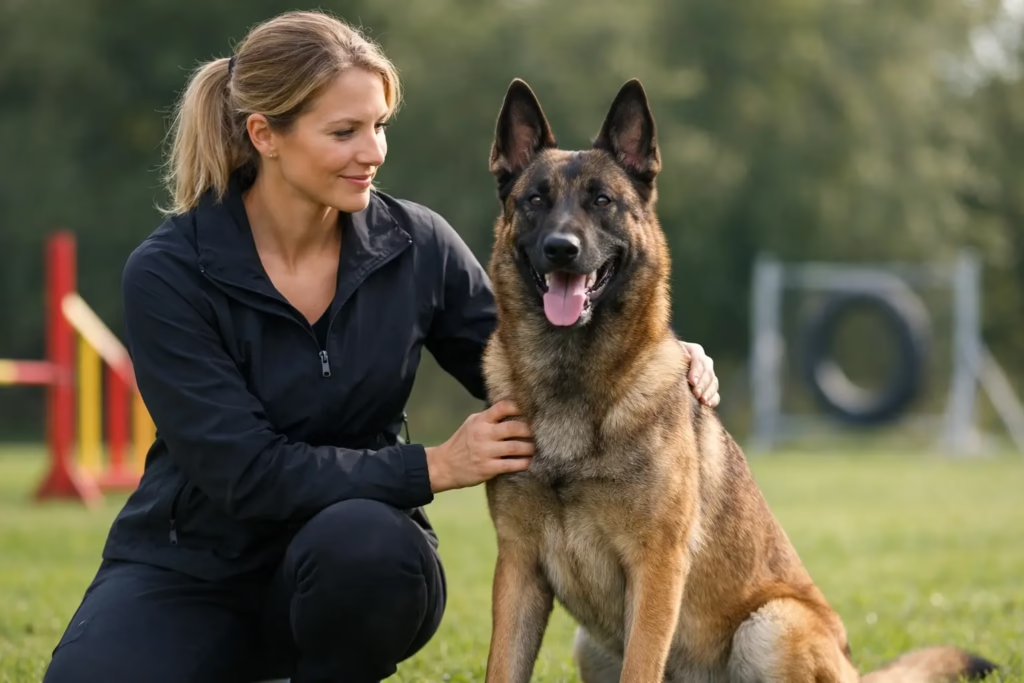
A sport prospect Belgian Malinois is not simply the busiest puppy in the litter. The right prospect combines clear-headed confidence, athletic structure, stable nerves, physical health, and a genuine willingness to work with its handler. Those qualities take thoughtful breeding, careful early development, and an honest match between the dog, the sport, and the person holding the leash.
For a serious sport home, choosing a puppy is the beginning of a long-term training partnership. Whether your goals include IGP, PSA, obedience, rally, agility, dock diving, scent work, or another performance path, the dog must be able to handle pressure, recover quickly, and stay engaged through repetition. High energy alone is not a substitute for those traits.
What Makes a Sport Prospect Belgian Malinois?
Belgian Malinois are known for intelligence, intensity, speed, and deep engagement with their people. Those characteristics can make the breed exceptional in sport, but they also make responsible selection essential. A dog bred for performance potential should have the genetic foundation and early experiences to become a stable, capable adult, not just a puppy that looks dramatic on a bite pillow or races after a toy.
A promising sport prospect typically shows curiosity in new environments, a willingness to investigate rather than avoid, and an ability to re-engage after a surprise or distraction. In training, handlers often value food motivation, toy interest, persistence, and a desire to work in partnership. Yet each quality needs balance. A puppy with strong drive but poor recovery may become overwhelmed. A puppy that is social and easygoing but lacks intensity may be better suited to a different kind of active home.
Sport potential also depends on the individual discipline. A future agility dog may need exceptional body awareness, environmental confidence, and the ability to shift quickly between high arousal and precise control. A protection-sport prospect needs sound nerves, discernment, confidence, and stable behavior under pressure. An obedience-focused home may prioritize focus, biddability, food drive, and the patience to enjoy detailed repetition. The best placement begins with a clear conversation about what the owner plans to do with the dog.
Drive Matters, but So Does an Off Switch
A Belgian Malinois should have the desire to work. For many sport handlers, that means a dog that readily chases, carries, tugs, searches, problem-solves, and returns to the handler for more. These traits help create productive training sessions and can make reinforcement clear and meaningful.
However, a dog that cannot settle is not automatically a stronger prospect. A reliable off switch supports sound development, household management, travel, recovery, and long-term training. Sport dogs need periods of real rest. Puppies, especially, need sleep and calm time to process new experiences and grow appropriately.
The goal is not to find the most frantic puppy. It is to find a puppy with usable energy: one that can rise to the work, think while aroused, and come back down afterward. That balance supports both performance and quality of life.
Confidence and Recovery Are Different Traits
Confidence is often described as boldness, but responsible evaluation goes deeper. A confident puppy may approach a new surface, sound, object, or person with interest. A resilient puppy may startle briefly, then recover and return to normal behavior. Both matter.
No puppy should be expected to be perfect in every unfamiliar situation. Young dogs are developing rapidly, and temperament unfolds over time. What matters is the overall pattern, including curiosity, recovery, engagement, and the ability to accept appropriate guidance. Breeders and future owners should avoid making major conclusions from a single moment or an overly staged puppy test.
Health and Structure Protect Future Performance
Sport asks a great deal of a dog’s body. Fast turns, jumps, decoy work, tracking, climbing, and repeated training sessions can expose weaknesses that are not obvious in a young puppy. That is why a true sport prospect starts with health-focused breeding decisions and structurally sound parents.
Responsible breeders use appropriate health evaluations when making breeding choices and maintain documented pedigree information. AKC registration provides valuable documentation of breed registration, while health testing and thoughtful selection help support the long-term welfare of the puppies produced. Registration alone does not guarantee health, temperament, or suitability for sport. The complete breeding program matters.
Structure should support efficient movement and durability. A Belgian Malinois needs balanced proportions, sound feet, a functional topline, and movement that appears coordinated and purposeful. No breeder can promise that a puppy will become a titled sport dog or remain injury-free throughout life. Genetics, growth, nutrition, conditioning, training decisions, and plain chance all play a role. Still, selecting parents with sound structure and health information gives a puppy a better starting point.
Owners also protect a prospect by allowing it to mature. Repetitive jumping, forced running, and intense impact work should not be rushed during growth. A puppy can build confidence, engagement, foundational obedience, body awareness, and play skills long before its body is ready for demanding adult-level work.
Early Development Shapes the Future Partner
A well-bred puppy benefits from purposeful early handling and socialization. Daily interaction can help puppies become comfortable with human contact, routine care, handling, and the normal activity of a home environment. Age-appropriate exposure to surfaces, sounds, movement, and novel objects can encourage curiosity and adaptability when introduced thoughtfully.
Socialization is not a race to meet every person and visit every crowded public setting. Overexposure can be just as unhelpful as isolation, particularly for an intense working breed. The purpose is to build neutral confidence, not to teach a puppy that every stranger, dog, or distraction deserves its attention.
When a puppy goes home, the new owner becomes responsible for continuing this work. Short, positive outings; safe exposure to new environments; crate training; leash foundations; play; rest; and consistent routines all matter. A sport prospect develops through thousands of ordinary interactions, not one impressive training session.
The Right Handler Is Part of the Equation
A Belgian Malinois with strong sport potential needs an owner who will provide structure, training, exercise, and clear boundaries. This does not mean the dog must live with a professional competitor. It does mean the home should understand the breed’s intensity and have a realistic plan for meeting its needs.
Experienced sport handlers may be prepared for a higher-drive puppy with substantial training goals. An active family interested in obedience, hiking, scent work, and beginner sport may thrive with a puppy that has excellent engagement and confidence but a more moderate intensity level. Neither placement is lesser. The mistake is choosing based on appearance, trend, or the idea that every Malinois should fit the same job.
Before reserving a puppy, be ready to discuss your dog experience, household routine, children and other pets, training plans, travel schedule, sport interests, and access to qualified instruction. Good breeders ask these questions because responsible placement is part of responsible breeding. The aim is not to sell the most intense puppy to every buyer. It is to place each puppy where it can succeed.
Plan for Professional Training Support
Even skilled dog owners benefit from working with a trainer who understands Belgian Malinois and the chosen sport. The right instructor can help build engagement without creating conflict, develop clear markers and reward systems, and prevent small issues from becoming established habits.
For protection sports, training should be conducted through an established club or qualified professional with a strong emphasis on control, safety, and stable temperament. A protection prospect is not a shortcut to a personal protection dog, and improper training can create serious behavioral and legal consequences. Responsible training develops a dog that is clear, controllable, and socially stable.
Questions to Ask About a Sport Prospect
When speaking with a breeder, ask about the parents’ temperaments, health evaluations, structure, training backgrounds, and everyday behavior. Ask how puppies are raised, what early handling and socialization they receive, and how the breeder evaluates individual personalities as the litter develops.
It is also reasonable to ask how the breeder matches puppies to buyers. A breeder who knows the litter well may see differences in confidence, food motivation, persistence, environmental response, and natural engagement that are not obvious during a short visit. Honest guidance is more valuable than being promised the “best” puppy before the puppies are developmentally ready to assess.
At Black Rose Malinois, responsible placement centers on breeding decisions, early development, and clear communication with prospective owners. The right puppy is not defined by a label alone. It is defined by the fit between its individual strengths and the work its future owner is prepared to do.
A sport prospect should inspire ambition, but it should also invite patience. Choose the puppy with the right foundation, give it time to grow, and build the partnership one clear, consistent training session at a time.