
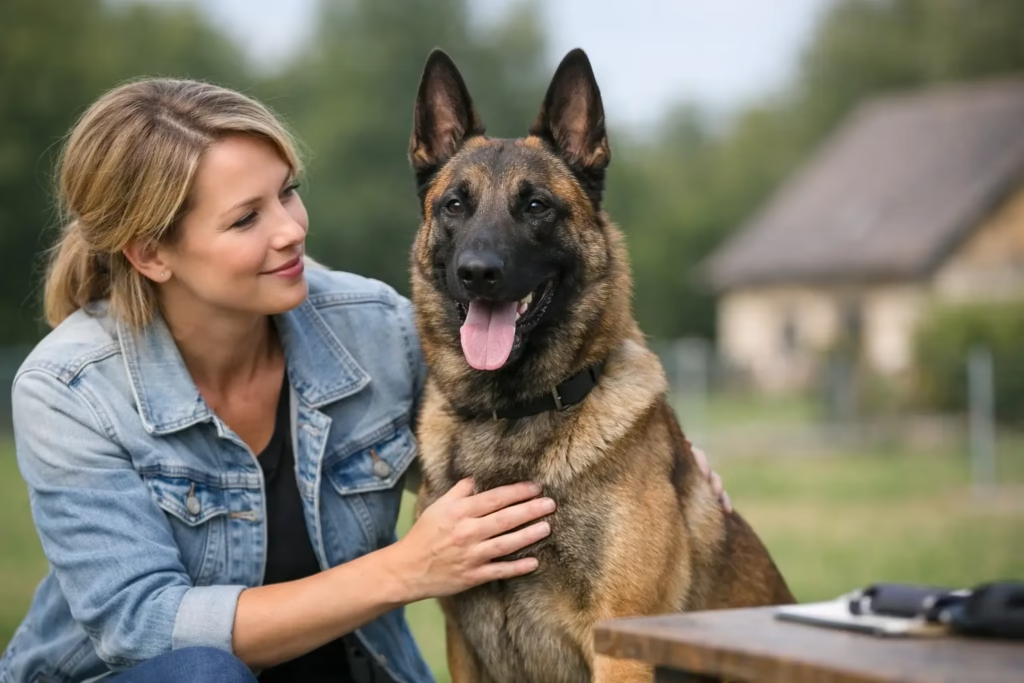
A Belgian Malinois puppy can grow into an exceptional companion, training partner, sport dog, or working prospect. That potential does not happen by accident. Responsible breeding begins long before a litter is born, with deliberate decisions about the parent dogs, puppy development, health, and the type of home each puppy is prepared to join.
For serious buyers, understanding a breeder’s standards matters as much as choosing a puppy. Belgian Malinois are intelligent, athletic, loyal, and highly trainable, but they are also intense dogs that need structure, daily engagement, and clear direction. A responsible breeder does not treat every buyer or every puppy as the same.
Responsible Breeding Starts With Purpose
Good breeding programs have a clear reason for producing each litter. The goal should be to preserve and improve the qualities that make the Belgian Malinois a respected breed: sound structure, stable nerve, athletic ability, confidence, trainability, and appropriate working drive.
This requires more than pairing two dogs with attractive pedigrees or impressive titles. A breeder must understand the strengths and limitations of each parent. One dog may bring exceptional engagement and working desire, while another contributes steady environmental confidence, sound movement, or a more balanced off-switch. The pairing should be considered as a whole, with the future puppies in mind.
AKC registration is an important part of documented lineage and breed identity, but registration alone is not proof of a carefully planned breeding program. Buyers should look for breeders who can explain why a specific sire and dam were selected and what traits they expect the litter to carry forward.
Health Evaluations Protect More Than a Puppy’s Future
Health-focused decisions are a central part of responsible breeding. Reputable breeders evaluate their dogs before breeding and use available health information to make informed choices. For a physically demanding breed like the Belgian Malinois, sound joints, overall condition, and structural correctness are not minor details. They affect a dog’s comfort, durability, and ability to participate in the activities its owner hopes to enjoy.
Health testing does not create a guarantee that a puppy will never face a medical concern. Genetics are complex, and every living animal carries some level of risk. What thoughtful health evaluation does provide is a better foundation for reducing avoidable risk and making breeding decisions based on facts rather than assumptions.
Responsible breeders are also transparent about their dogs. They should be prepared to discuss parent health information, lineage, temperament, and the care provided to the litter. Buyers deserve clear answers, especially when making a long-term commitment to a high-drive breed.
Temperament Is Not an Afterthought
A Malinois should be alert and engaged, not needlessly unstable or overwhelmed by ordinary life. Drive and confidence can be valuable qualities, particularly for sport and working homes, but they must be paired with clear nerves, recoverability, and the ability to build a productive relationship with a handler.
Temperament has a genetic component, and early experiences shape how that potential develops. Breeding dogs with sound, reliable temperaments gives puppies a stronger starting point. Raising those puppies with consistent handling and age-appropriate exposure helps them become more adaptable as they transition to new homes.
The right level of drive depends on the home. A serious protection or performance prospect may need a different intensity level than a puppy intended for an active family committed to obedience, exercise, and training. Neither placement is less valuable. The responsible choice is matching the puppy’s individual traits to an owner who can meet its needs.
Early Puppy Development Matters Every Day
The weeks spent with the breeder are formative. Puppies should be raised in a clean, attentive environment where they receive daily observation and handling. A hands-on breeder learns how each puppy responds to people, novelty, food, movement, play, and mild challenges. That knowledge is valuable when it is time to guide buyers toward the best fit.
Early socialization should be thoughtful, not chaotic. Puppies benefit from safe exposure to common household sounds, surfaces, handling, and appropriate new experiences. The goal is not to push young puppies beyond what they can process. It is to help build curiosity, confidence, and resilience in a controlled way.
This is especially relevant for Belgian Malinois. Their intelligence and sensitivity can make them quick learners, but it also means inconsistent handling or insufficient guidance can create problems later. Early development should support the kind of dog the puppy is likely to become: engaged, confident, responsive, and ready to learn.
Placement Is a Breeder’s Ethical Responsibility
The most responsible breeding decision can still lead to a poor outcome if a puppy is placed in the wrong home. Belgian Malinois are not a low-maintenance breed. They need meaningful exercise, training, boundaries, and a job to do, whether that job is formal sport work, advanced obedience, hiking, scent work, or structured daily activity with their family.
A breeder should ask prospective owners real questions. What experience do they have with driven dogs? How much time can they commit to training? What does their daily routine look like? Are they looking for a family companion, a sport prospect, or a working dog? Do they understand that a young Malinois will require guidance long after the excitement of bringing home a puppy?
A good match is not always based on which puppy is the boldest or most visually striking. The best puppy for an experienced decoy or competition handler may be too much dog for a first-time working-breed owner. Conversely, a more moderate puppy may thrive in an active home that values consistency, engagement, and a close relationship with its dog.
At Black Rose Malinois, responsible placement is treated as part of the breeding process, not as an afterthought once a deposit is received. The objective is to give each puppy the strongest opportunity to succeed in the home and role for which it is best suited.
What Buyers Should Ask a Breeder
Buyers should feel comfortable asking direct questions before committing to a puppy. A reputable breeder welcomes informed questions because they show that a prospective owner is taking the decision seriously.
Ask about the parent dogs’ temperaments, health evaluations, AKC registration, and the goals behind the pairing. Ask how the puppies are raised, what early handling and socialization they receive, and how the breeder evaluates individual puppies. It is also reasonable to ask what support is available after the puppy goes home.
Pay attention to the quality of the answers. Clear, specific information is more meaningful than broad promises. Responsible breeders recognize that puppies are living commitments, not products moving through a checkout process. They want buyers to understand the breed’s demands before a puppy is placed.
The Buyer Has Responsibilities Too
Ethical breeding and responsible ownership work together. Even a well-bred, well-started puppy needs consistent leadership after it leaves the breeder. Owners should be ready to invest in quality nutrition, veterinary care, safe containment, socialization, and training that suits the dog’s age and temperament.
For many Malinois owners, professional training support is a wise investment. A qualified trainer can help establish communication, appropriate outlets for drive, and household expectations before unwanted habits become established. Training should be ongoing, practical, and fair. The goal is not simply to tire a Malinois out, but to teach the dog how to use its energy productively.
Responsible breeding gives a puppy a carefully considered beginning. The next chapter depends on an owner who is prepared to provide direction, purpose, and a stable lifelong home.