
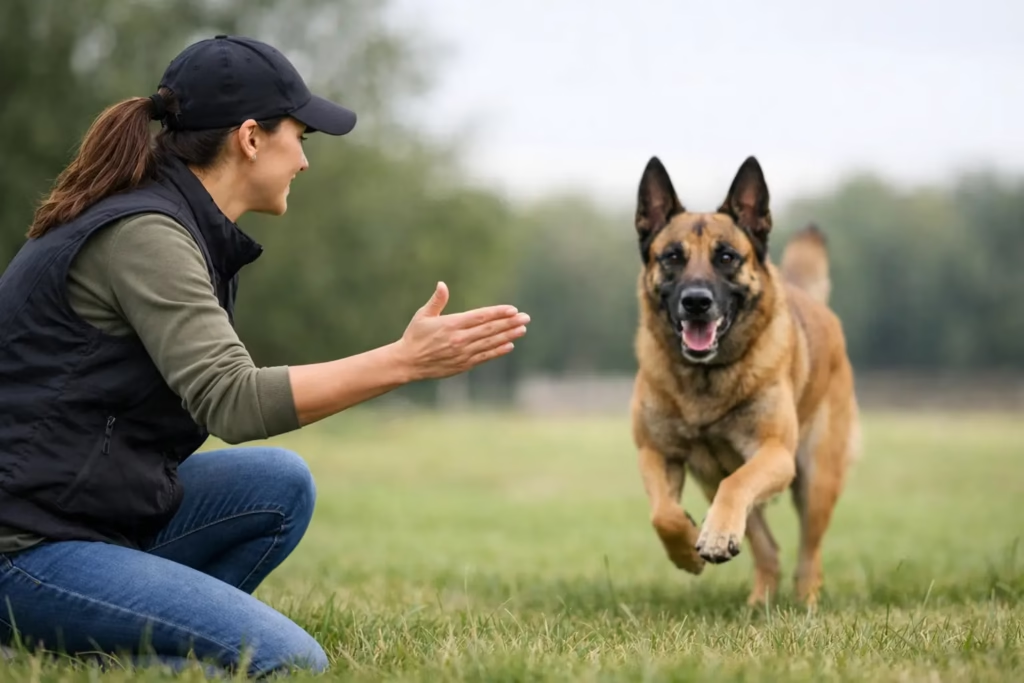
A Belgian Malinois can look perfectly obedient in the yard, then appear to forget their name when a squirrel moves, a helper enters the field, or another dog breaks into motion. That contrast is exactly why learning how to train Malinois recall must go beyond calling your dog repeatedly in low-distraction settings. Recall is a safety behavior, and for a fast, athletic, high-drive breed, it deserves deliberate training from puppyhood through adulthood.
A reliable recall is not built by correcting a dog for being interested in the world. It is built by teaching the dog that turning away from that world and returning to you is clear, rewarding, and non-negotiable. The right approach depends on the individual dog, their age, temperament, drive, and prior training, but the foundation stays the same: clarity, consistency, and controlled progression.
Start Recall Training Before You Need It
The best time to begin is when your Malinois puppy comes home. Early socialization, daily handling, and thoughtful puppy development give a young dog a useful starting point, but a new owner must continue that work with structure. In the first weeks, practice in the house, fenced yard, or another secure, quiet location where your puppy has little reason to ignore you.
Choose one recall word and protect it. “Come,” “here,” or a short name-based cue can work well, as long as every member of the household uses it consistently. Say the cue once in a calm, upbeat tone. When your puppy moves toward you, mark the choice with praise such as “yes,” then reward immediately when they arrive.
At this stage, avoid calling your puppy only for something disappointing, such as ending play, going into the crate, or receiving a bath. If recall always predicts the fun is over, a smart Malinois will begin weighing their options. Call your puppy, reward them, and often release them back to sniffing, playing, or exploring. Returning to you should not automatically mean losing access to what they want.
How to Train Malinois Recall With a Clear System
A recall becomes dependable when the dog understands three separate pieces: hear the cue, turn toward the handler, and arrive close enough to be safely handled. Do not reward a dog simply for looking at you from across the yard if your goal is a finished recall. Reward the completed behavior.
Begin at a short distance. Let your dog move a few feet away, say the recall cue once, and move backward as they come in. Backward movement often encourages pursuit and keeps the exercise active, which suits many Malinois well. When the dog reaches you, take hold of their collar or harness gently, reward, then release.
That collar-touch step matters. Many dogs learn to race near their owner and pivot away just before being caught. By calmly pairing arrival with a brief collar touch and a valuable reward, you teach your Malinois that being physically handled at the end of recall is normal and positive.
Use rewards that compete with the environment. For some Malinois, food is highly effective. For others, a ball, tug toy, brief game of chase, or permission to resume tracking a scent may be more valuable. A working-minded dog does not need the same reward in every setting. The reward should match the difficulty of the moment.
Keep the Cue From Losing Meaning
Repeatedly calling “come, come, come” teaches a dog that the first cue is optional. Say it once, then help the dog succeed. In early training, that may mean moving closer, increasing your energy, or using a long line to guide the dog back without jerking or dragging them.
If your dog does not respond, do not turn recall into an argument. Assess the training setup instead. The distance may be too great, the distraction may be too strong, or the reward may not matter enough. Lower the difficulty and rebuild successful repetitions before expecting more.
Use a Long Line Before Adding Freedom
A long line is one of the most practical tools for recall training. It allows your Malinois to experience distance, movement, and outdoor distractions while preventing self-rewarding departures. A dog that ignores recall and gets to continue chasing wildlife, greeting strangers, or running toward other dogs is rehearsing the wrong behavior.
Start with a 15- to 20-foot line in a secure open area. Allow your dog to investigate, then call them back at easy moments. Reward generously when they respond. As their reliability grows, practice around gradually stronger distractions: new locations, mild foot traffic, toys on the ground, another person moving nearby, or a familiar dog at a safe distance.
The long line is not a substitute for supervision. Keep it clear of obstacles and never leave a dog dragging a line unattended. For powerful adult Malinois, use equipment that is appropriate for their size and training stage, and keep sessions short enough that the dog stays engaged.
Train Around Drive, Not Against It
Belgian Malinois are often selected for intensity, athleticism, intelligence, and a strong desire to engage with a task. Those qualities can support excellent recall, but they also mean distractions may carry real value. A moving object, livestock, a decoy, another dog, or a trail of scent can be more compelling than a routine treat.
Rather than expecting your dog to ignore drive, teach them that recall is part of the work. For example, call your dog away from a toy, reward with a return to you, then make the toy come alive as the next reward. In sport or working environments, practice recall before arousal reaches its highest point. A dog that can return from moderate excitement is being prepared for more difficult scenarios.
Do not test recall by putting an unprepared dog in an overwhelming situation. Off-leash freedom is earned through a long history of successful choices, not through optimism. Even well-trained dogs should be managed carefully around roads, wildlife, unfamiliar dogs, and other hazards.
Avoid Common Recall Mistakes
One common mistake is punishing the dog after they finally come back. If your Malinois slips away, takes thirty seconds to return, and is met with anger, they may learn that approaching you is unsafe. Secure the dog calmly, then review what allowed the failure. Management and better training prevent repeat incidents more effectively than frustration.
Another mistake is increasing difficulty too quickly. A recall that works in the kitchen is not automatically ready for a busy park. Dogs do not generalize skills as broadly as people expect. Train the same behavior in different places, at different distances, and around carefully selected distractions.
Finally, avoid using your recall cue casually. If you need to bring your dog inside after a long play session and suspect they will ignore you, go get them or use a leash rather than spending your cue without follow-through. Every successful response strengthens the habit. Every ignored cue weakens it.
Add an Emergency Recall Cue
It is wise to teach a separate emergency recall for moments when immediate response matters most. This can be a unique word, a whistle pattern, or another sound your dog does not hear during everyday training. Reserve it for serious situations and pair it with the highest-value reward your dog receives.
Practice the emergency cue only a few times at first, in low-distraction environments. Give the cue, make it easy for your dog to succeed, and deliver an exceptional reward when they arrive. That could be several pieces of food in a row, a favorite tug session, or access to a prized toy. The goal is for the cue to create an instant expectation that returning to you is worth everything.
When Professional Guidance Helps
If your Malinois has begun ignoring recall, chasing animals, reacting to dogs, or leaving the property, seek qualified, breed-aware training support before granting more off-leash access. Recall problems can involve more than obedience. Fear, frustration, over-arousal, prey drive, and inconsistent handling can all affect the dog’s response.
A responsible breeder can also be a valuable early resource, particularly for new owners learning the demands of the breed. At Black Rose Malinois, we emphasize that sound temperament, early development, and responsible placement create a foundation, but consistent owner training determines how that potential develops in everyday life.
The most reliable recall is not the one your Malinois performs once for an audience. It is the response built through hundreds of calm, rewarding repetitions, then protected with sensible management when the environment asks too much. Keep training fair, make returning to you worthwhile, and let freedom grow at the same pace as your dog’s proven reliability.