
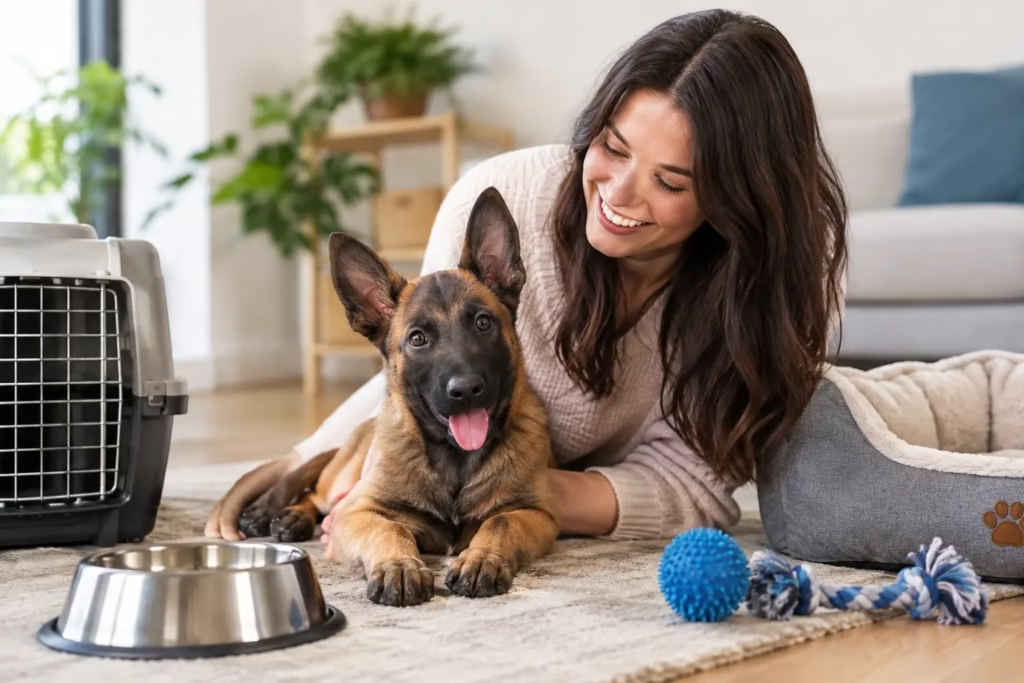
A Belgian Malinois puppy will notice every gap in your routine, every loose item on the floor, and every moment without direction. The best home setup for a Malinois puppy is not defined by a large house or expensive equipment. It is a safe, orderly environment that gives a highly intelligent, active puppy clear boundaries, productive outlets, and a reliable place to rest.
Malinois puppies are alert, athletic, and quick to learn patterns. Those qualities can make them exceptional companions, sport dogs, and working prospects, but they also mean a puppy can develop unwanted habits quickly if the home is unstructured. Preparing before your puppy arrives helps protect your belongings, support early training, and give the puppy confidence in its new environment.
The Best Home Setup for a Malinois Puppy Starts With Boundaries
Your puppy does not need access to the entire home on the first day. In fact, too much freedom too soon often leads to chewing, house-training mistakes, overstimulation, and rehearsal of behaviors you will later need to correct.
Choose one primary living area where the puppy can be supervised. A kitchen, family room, or nearby office space often works well because it lets the puppy remain part of daily life without becoming overwhelmed by the whole house. Use gates, closed doors, and a puppy pen to make that area manageable. The goal is not isolation. It is controlled access while your puppy learns household rules.
Keep the floor clear of shoes, children’s toys, electrical cords, medication, laundry, and small objects that can be swallowed. Belgian Malinois puppies are often determined investigators. If an item is within reach, assume the puppy will test it with its mouth.
A designated puppy zone should include a crate, water, a durable chew item, and a clear surface that is easy to clean. Avoid leaving a pile of toys available all day. Rotate a few appropriate options instead. This keeps toys valuable and makes it easier to redirect biting and chewing onto acceptable items.
Set Up a Crate as a Resting Place
A properly introduced crate is one of the most useful tools for raising a Malinois puppy. It supports house training, safe travel, recovery after activity, and the ability to settle when the household is busy. It should never be used as punishment or as a substitute for training, exercise, and interaction.
Select a crate that allows the puppy to stand, turn around, and lie down comfortably. For a growing puppy, a larger crate with a divider can be practical. Place it in a quiet but connected part of the home, rather than somewhere completely removed from family activity.
Start by feeding meals near or inside the crate, offering a safe chew during short crate sessions, and allowing the puppy to enter voluntarily. Short, positive repetitions are more effective than forcing long periods of confinement. A Malinois that learns to rest calmly is easier to train and better equipped to handle normal household changes.
Create a Predictable Daily Rhythm
A puppy thrives when meals, potty breaks, training, play, and rest happen in a reasonably consistent order. This does not require a rigid minute-by-minute schedule, but it does require the adults in the home to agree on expectations.
Young puppies need frequent trips outside, especially after waking, eating, drinking, playing, and crate time. Take the puppy to the same appropriate potty area, give it time to finish, and reward success immediately. Quiet consistency works better than scolding accidents. If accidents happen indoors, the usual cause is too much freedom, too much time between breaks, or insufficient supervision.
Rest is equally important. Malinois puppies can appear as if they have unlimited energy, then become overtired and frantic. Excessive nipping, zooming, barking, and difficulty listening may signal that the puppy needs a calm nap, not another high-energy activity. Build planned crate or pen rest into the day so the puppy learns that activity is followed by recovery.
Exercise Is Not the Same as Exhaustion
It is tempting to try to tire out a Malinois puppy with long walks, running, repetitive ball throwing, or intense rough play. That approach can be hard on developing joints and may create a puppy that only learns to demand more physical stimulation.
Instead, prioritize short age-appropriate outings, exploration on safe surfaces, simple obedience sessions, food puzzles, scent games, and controlled play. Five focused minutes of engagement can be more productive than a long, chaotic session. Your puppy needs physical movement, but it also needs to learn to think, listen, and settle.
For future sport, performance, or working homes, early development should still be purposeful and age appropriate. Confidence, engagement, environmental exposure, and sound foundation behaviors matter more than rushing advanced skills.
Make Training Part of the Home Environment
The most successful training does not happen only in a formal class or during a scheduled session. It happens when the puppy learns that polite behavior opens access to everyday rewards.
Ask for a simple sit before meals, before going through a doorway, or before greeting family members. Reward the puppy for choosing to lie down calmly near you. Call the puppy to you from short distances and make coming to you worthwhile. These small repetitions build responsiveness without turning every interaction into a demanding drill.
Use a lightweight leash indoors when you are actively supervising. This can prevent the puppy from practicing chasing, jumping on visitors, or grabbing household items. Never leave a tethered puppy unattended. The leash is a management tool, not a way to restrain a puppy for long periods.
Everyone in the home should use the same cues and rules. If one person allows jumping on the couch, another corrects it, and a third encourages it during play, the puppy receives mixed information. A consistent household is especially important for a Belgian Malinois, a breed that pays close attention to cause and effect.
Plan for Socialization Without Overwhelming the Puppy
Early socialization is not a race to introduce your puppy to every person, dog, store, and noisy environment. It is the careful process of teaching the puppy that new sights, sounds, surfaces, and people can be handled calmly and safely.
Start at home. Let the puppy experience household sounds at a comfortable distance, such as the vacuum, television, doorbell, and normal kitchen activity. Introduce stable visitors one at a time, and give the puppy space to approach rather than insisting on greetings. Reward curiosity and calm observation.
If there are children in the home, adult supervision is essential. Children should be taught not to chase, corner, climb on, or disturb the puppy while eating or resting. In return, the puppy should be guided toward appropriate play and given breaks before excitement turns into biting or frantic behavior.
Interactions with other dogs should be selective. A well-mannered, healthy adult dog may be a better teacher than a busy dog park full of unfamiliar dogs. Dog parks can bring unpredictable play styles, disease exposure, and situations that are difficult to manage with a young puppy. Quality experiences matter more than quantity.
Secure the Yard and Entry Points
A fenced yard can be helpful, but it is not a complete exercise plan. It is a place for supervised potty breaks, training, and safe play. Check fences for loose boards, digging gaps, latch problems, and areas where a growing athletic dog could climb or squeeze through.
Avoid leaving a Malinois puppy alone outdoors for extended periods. Puppies can bark at passing activity, dig, chew landscaping, or rehearse fence-running. More importantly, they miss the guidance and engagement that help shape good behavior.
Entry routines deserve attention as well. Malinois are quick learners, and an open front door can become an exciting opportunity. Use gates, a leash, or a secure interior barrier when people enter and leave. Teach the puppy that doors open when it is calm, not when it rushes forward.
Choose Equipment That Supports Good Habits
You do not need a house full of gadgets. A secure crate, puppy pen or gates, appropriately sized collar or harness, standard leash, long line for supervised training, durable chew items, food-reward pouch, and easy-to-clean bedding cover the essentials.
Be selective with toys. Avoid items that can splinter, break into small pieces, or encourage unsafe unsupervised chewing. If the puppy becomes overly intense about a toy, use it in short training sessions rather than leaving it available all the time. This helps you preserve its value as a reward.
For food-based enrichment, choose options that match your puppy’s chewing style and supervise until you know how the puppy uses them. A highly driven puppy may work intensely for food, which makes feeding time an excellent opportunity for calm problem-solving and engagement.
Prepare the People, Not Just the Space
The home setup matters, but the people in it matter more. Before bringing a puppy home, discuss feeding responsibilities, potty schedules, sleeping arrangements, training rules, visitor expectations, and who will supervise during work hours. If your household has long periods with no one available, plan for appropriate care rather than expecting a young puppy to manage alone.
A responsible breeder-guided placement process helps ensure that the puppy’s temperament and potential align with the home’s goals. At Black Rose Malinois, we emphasize health-conscious breeding, early handling, and thoughtful placement because the right start supports the dog for years, not just the first few weeks.
Your puppy does not need a perfect home. It needs a prepared one: a place to rest, clear rules, consistent guidance, safe exposure to the world, and owners willing to invest in daily training. Start small, stay observant, and let each calm, successful repetition build the dog you hope to live and work with.