
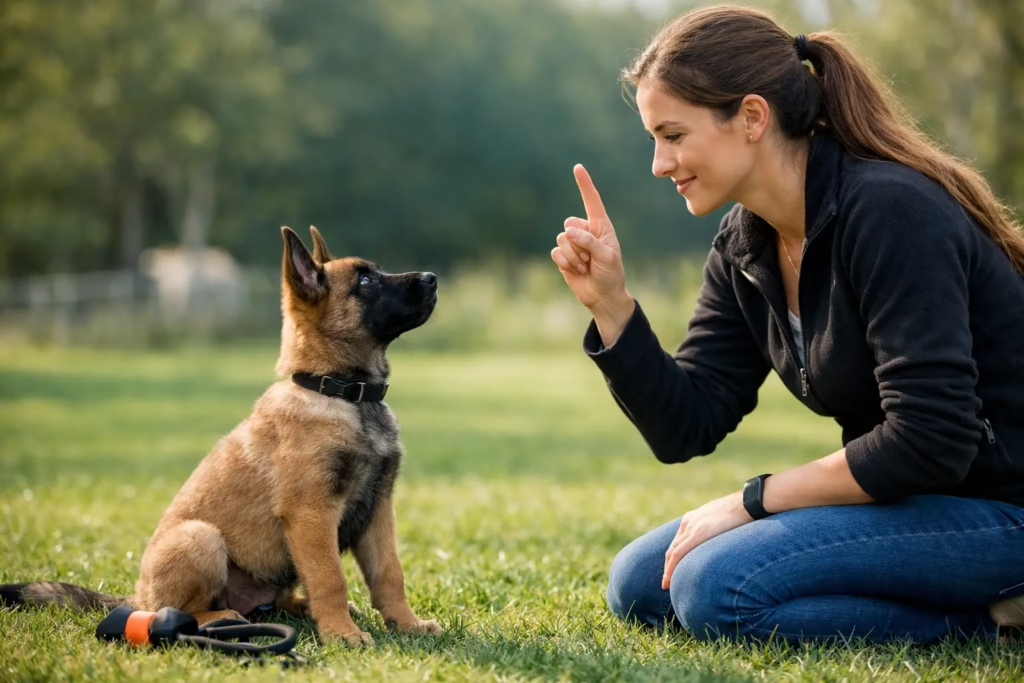
A Belgian Malinois puppy does not need to wait until obedience class to begin learning. For prospective owners asking when should Malinois puppies start training, the answer is simple: training begins from day one, but the type of training must match the puppy’s age, physical development, and temperament.
This is a highly intelligent, observant breed that learns patterns quickly. Every interaction teaches something. A puppy learns whether jumping earns attention, whether pulling gets them where they want to go, whether a crate is a calm resting place, and whether people and new environments are safe. Early training is not about demanding perfection from a very young puppy. It is about building confidence, communication, engagement, and good habits before unwanted habits become established.
When Should Malinois Puppies Start Training at Home?
A responsible breeder begins early development well before a puppy leaves for a new home. Daily handling, exposure to normal household sounds, safe environmental changes, and gentle human interaction all help puppies develop resilience and comfort around people. At Black Rose Malinois, early socialization and individualized attention are part of preparing puppies for the homes and training paths that suit them best.
Once a puppy comes home, usually around eight weeks of age, the new owner should begin structured routines immediately. The first sessions should be brief, positive, and practical. Name recognition, coming when called, following a food lure, settling in a crate, and calmly wearing a collar are meaningful training lessons for an eight-week-old Malinois.
The goal is not to drill commands for long periods. Young puppies have short attention spans and need plenty of sleep, play, and quiet time. A few one- to three-minute sessions spread throughout the day are far more productive than one long session that leaves the puppy overwhelmed or frustrated.
The first weeks set expectations
The early weeks in a new home are when a puppy learns the household rules. Decide in advance where the puppy will sleep, where meals will be served, which furniture is off-limits, and how family members will respond to mouthing or jumping. Consistency matters because Belgian Malinois puppies are quick to notice when one person allows a behavior another person corrects.
House training should also start immediately. Take the puppy outside after waking, eating, drinking, playing, and resting in the crate. Reward the puppy calmly and promptly when they eliminate in the right place. Avoid punishment for accidents. A puppy that is frightened to eliminate in front of an owner may simply hide the behavior rather than learn where to go.
What Training Looks Like From 8 to 12 Weeks
Between eight and 12 weeks, focus on relationship-building and everyday skills. This is a valuable period for introducing the puppy to the world in a controlled way. A sound Malinois should be curious and capable of recovery, but confidence grows through positive experiences, not forced exposure.
Teach the puppy that paying attention to you is rewarding. Use a cheerful voice, food, a toy, or brief play to reinforce eye contact and following. Begin a simple recall by saying the puppy’s name and moving away a few steps, then rewarding the puppy for coming to you. Start leash introduction indoors or in a quiet, low-distraction area before expecting polite walking in a busy public setting.
Crate training is especially useful for this active, busy breed. A properly introduced crate supports house training, prevents destructive rehearsal when supervision is not possible, and gives the puppy a dependable place to rest. Make the crate positive with meals, safe chews, and short periods of calm confinement. Do not use it as punishment.
Bite inhibition also deserves attention early. Malinois puppies often use their mouths enthusiastically during play. Redirect biting to an appropriate toy, pause interaction when teeth touch skin, and reward calmer choices. Rough hand play may seem harmless with a small puppy, but it can create a habit that is difficult to manage as the dog grows stronger and faster.
Socialization Is More Than Meeting Everyone
Socialization is often misunderstood as taking a puppy everywhere and allowing every person or dog to interact with them. For a Belgian Malinois, quality matters far more than quantity. The objective is a puppy that can observe unfamiliar things, recover from mild surprises, and remain connected to its handler.
Introduce new surfaces, stable adults, calm children, car rides, household sounds, grooming tools, friendly dogs with appropriate manners, and different environments at a pace the puppy can handle. Keep experiences short and successful. If the puppy appears worried, creates distance, freezes, or cannot take food, the situation may be too intense. Give the puppy more space and make the next exposure easier.
Avoid dog parks, chaotic pet-store greetings, and uncontrolled interactions with unknown dogs. A young puppy’s immune status and emotional development both deserve protection. Your veterinarian can help you plan safe public exposure around your puppy’s vaccination schedule.
A well-socialized Malinois is not necessarily a dog that wants attention from every stranger. Many mature dogs are naturally reserved or neutral with unfamiliar people. What matters is stable behavior: the dog can remain composed, respond to the handler, and move through the environment without fear or unnecessary conflict.
Formal Obedience Training Can Start Early
Puppy kindergarten or a well-run beginner obedience program can begin once your veterinarian confirms it is appropriate based on vaccinations and local health risks. Look for an instructor who understands working breeds and uses clear, fair, reward-based teaching. A good class should help owners build engagement, basic control, handling tolerance, and calm behavior around distractions.
At this stage, useful commands include sit, down, place, leave it, drop it, wait, and recall. Do not become focused on making every position perfectly precise. Precision can come later. First, teach the puppy that learning with you is enjoyable and that responding to you brings access to rewards, play, movement, and praise.
For families, training should include every adult who will regularly handle the dog. Children can participate in supervised, age-appropriate activities, such as tossing a treat for a recall or asking for a simple sit before a meal. Adults should manage leashes, boundaries, and higher-energy play until the dog is mature and consistently responsive.
Training From 3 to 6 Months: Add Structure, Not Pressure
As a Malinois puppy grows, owners can gradually increase expectations. Continue short daily sessions while introducing more distractions, longer recalls, loose-leash walking, polite greetings, and a reliable place command. This is also a practical time to teach the puppy to settle after activity. A dog that can switch off indoors is easier to live with than one that is always searching for the next task.
Mental work is valuable, but avoid turning every waking hour into stimulation. Scent games, food puzzles, basic obedience, and controlled tug play can satisfy a puppy’s need to use its brain. Just as valuable are scheduled naps and calm downtime. Overtired puppies often become mouthy, frantic, and difficult to redirect.
Physical exercise needs moderation. Growing Malinois puppies should have freedom to move, explore, and play on safe footing, but they should not be pushed through repetitive high-impact exercise. Long forced runs, frequent jumping, hard landings, and intense endurance work can place unnecessary stress on developing joints and growth plates. Your veterinarian can provide guidance based on your puppy’s individual development.
When to Begin Sport or Protection Foundations
Owners interested in obedience competition, tracking, scent work, agility, personal protection, or other performance activities should begin with foundations, not pressure. Engagement, toy play, environmental confidence, impulse control, and clear obedience are the building blocks for later work.
A puppy can learn to chase a toy, carry an object, tug with rules, search for food, or navigate low, age-appropriate obstacles. However, serious bitework, protection training, repetitive jumping, and physically demanding sport drills should be guided by a qualified professional and timed for the dog’s maturity. A driven puppy is not automatically ready for advanced work.
The same principle applies to protection prospects. The right program develops control, clarity, and sound nerves. It does not encourage indiscriminate suspicion, uncontrolled barking, or defensive behavior in a young dog. Responsible training protects the dog, the owner, and the public.
Adjust Training to the Puppy in Front of You
Even puppies from carefully selected, AKC-registered parents develop at different rates. One puppy may be bold and food-motivated, while another may be more thoughtful, toy-driven, or sensitive to new environments. Good training accounts for those differences instead of applying the same level of pressure to every puppy.
If your puppy is struggling with fear, escalating reactivity, intense guarding, or an inability to settle, address it early with an experienced trainer who has a strong record with Belgian Malinois. Waiting for a puppy to “grow out of it” can allow patterns to become more deeply rooted. Early guidance is usually easier and more effective than correction after the dog is fully grown.
The best time to begin is now, with age-appropriate expectations and a clear plan. A Malinois puppy does not need a demanding job at eight weeks old, but they do need consistent direction, thoughtful exposure, and an owner who understands that every ordinary day is part of their training.