
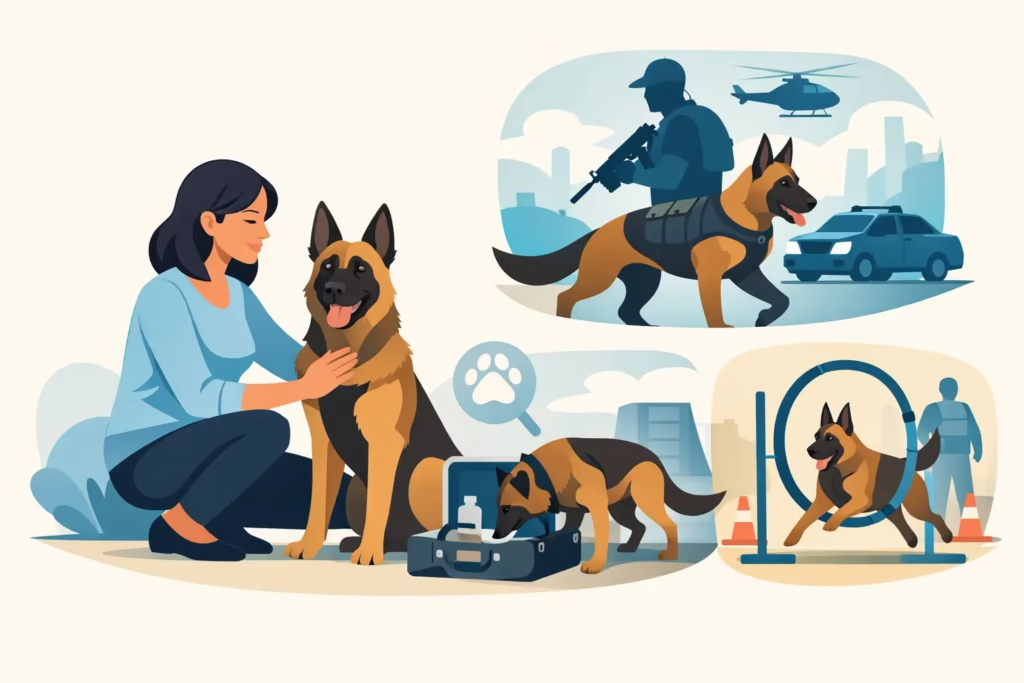
A Belgian Malinois that starts pacing the house, scanning every sound, and inventing its own job is not being stubborn. It is doing exactly what the breed was designed to do. If you are asking what is Belgian Malinois bred for, the short answer is work – real, demanding, consistent work that uses both body and mind.
That answer matters because this is not a breed that was developed to be passive, low-energy, or satisfied with a short walk around the block. The Belgian Malinois was shaped for usefulness. Understanding that purpose is one of the most important steps in deciding whether this breed fits your home, your goals, and your experience level.
What Is Belgian Malinois Bred For Originally?
The Belgian Malinois was originally bred as a herding dog in Belgium. Like other continental herding breeds, the Malinois was developed to manage livestock, respond quickly to a handler, and stay alert through long days of physical activity. That foundation still shows clearly in the breed today.
Herding work required more than speed. It demanded intelligence, responsiveness, stamina, confidence, and the ability to make fast decisions under pressure. A dog moving stock had to notice subtle changes, react immediately, and recover just as quickly. Those traits became central to the breed.
Over time, breeders and handlers recognized that the same qualities that made the Malinois effective around livestock also made the breed exceptionally capable in other demanding roles. That is why the modern Belgian Malinois is now strongly associated with police work, military service, detection, protection sports, advanced obedience, and high-level performance homes.
Why the Breed Excels in Modern Working Roles
The question what is Belgian Malinois bred for cannot be answered fully with herding alone, because the breed has long been valued for broader working ability. A well-bred Malinois typically combines high trainability with strong nerve, athletic structure, environmental awareness, and a desire to engage with its handler.
That combination is rare. Many dogs are energetic. Fewer can stay clear-headed under pressure, switch from intensity to control, and continue working day after day. The Malinois is respected because it often can.
This is why the breed appears so often in jobs that require precision and reliability. A properly bred and trained Malinois may be suited for protection work, scent work, tracking, agility, competitive obedience, dock diving, search tasks, or farm life with structure and direction. The exact outlet depends on the individual dog, its pedigree, its temperament, and the goals of the owner.
That last part matters. Not every Belgian Malinois is meant for the same path. Some have stronger working drive, some are more balanced for active family life, and some are especially well suited for sport or performance homes. Responsible breeding and placement help match those differences to the right environment.
The Traits Belgian Malinois Were Bred to Carry
When people see a Malinois in action, they often focus on speed and intensity first. Those traits are real, but they are only part of the picture. The breed was developed for a set of qualities that work together.
A Belgian Malinois should be alert without being unstable. It should be confident, not timid. It should be highly trainable, not chaotic. It should have energy, but that energy should be usable. The best representatives of the breed are not just busy dogs. They are dogs with purpose, structure, and the ability to channel drive into work.
This is also why temperament matters so much in breeding. Drive without sound nerves creates problems. Confidence without control creates problems. Athleticism without structure can limit long-term performance. A serious breeding program pays attention to all of these pieces because they affect how a puppy matures and what kind of life it can handle successfully.
What Is Belgian Malinois Bred For in a Pet Home?
This is where many buyers need a more nuanced answer. The Belgian Malinois was not originally bred to be a casual pet, but that does not mean the breed cannot live successfully in a family or companion home. It means the home has to be right.
A Malinois in a pet setting still needs a job, even if that job is not police work or formal sport. That job may look like advanced obedience, structured hiking, scent games, agility, protection training with a qualified trainer, daily engagement, or a consistent routine that includes mental and physical challenges. The breed tends to do best when it has clear expectations and regular interaction with its owner.
For active families, experienced dog owners, and people who genuinely want to train and participate with their dog, a Malinois can be deeply rewarding. The loyalty, responsiveness, and intelligence are a major part of the appeal. But there is a trade-off. This is usually not the best choice for a household that wants a low-maintenance dog, long stretches of downtime, or minimal training commitment.
Herding Instinct Still Shows Up Today
Even in homes far removed from livestock, original herding instincts can still be visible. Many Malinois naturally watch movement, react quickly, and try to control activity around them. That may show up in games, in how they interact with children, or in how they respond to other animals.
This does not make the breed unsuitable for family life, but it does mean owners need to understand what they are seeing. A dog bred for movement control and responsiveness may need guidance so those instincts are shaped correctly. Training, boundaries, and early socialization are not optional extras with this breed. They are part of responsible ownership.
Breeding Purpose Affects Temperament and Energy
One of the biggest mistakes buyers make is assuming all high-energy dogs are basically alike. They are not. The energy of a Belgian Malinois is tied to working purpose. It is often intense, observant, and ready to engage. That can be a huge advantage in the right hands and a poor fit in the wrong home.
This is why breeder selection matters so much. If a buyer wants a stable, trainable dog with sound structure and clear potential, the breeding behind that puppy matters. Health evaluations, parent temperament, pedigree, early handling, and socialization all influence how a puppy develops.
At Black Rose Malinois, that is exactly why placement is taken seriously. The goal is not simply to produce puppies. The goal is to produce well-bred Belgian Malinois with the health, confidence, and trainability the breed is known for, then place them in homes that understand and value those traits.
Is the Belgian Malinois Bred for Protection?
Yes, but with context. The breed is often selected for protection-related work because of its athleticism, trainability, confidence, and engagement with a handler. However, being bred for protection potential is not the same thing as being automatically suitable for every protection role, and it does not mean every Malinois should be pushed into that type of training.
A good protection prospect needs more than intensity. It needs stability, clear-headedness, strong nerves, and correct development. Poorly bred or poorly matched dogs can struggle, especially if owners chase drive without understanding temperament.
For many buyers, it is more accurate to say the Belgian Malinois was bred for serious work, and protection is one of the jobs that some well-bred individuals can perform very well.
What Prospective Owners Should Take From This
If you are asking what is Belgian Malinois bred for, the real question may be whether you want to live with a dog that needs purpose. This breed was developed to think, move, respond, and work closely with people. That is what makes the Malinois impressive, and it is also what makes the breed demanding.
The right owner usually enjoys training, welcomes structure, and wants an active, engaged dog rather than a decorative pet. The wrong owner often underestimates the daily investment the breed requires.
A well-bred Belgian Malinois can be an outstanding partner – loyal, athletic, intelligent, and deeply responsive. But success starts with honesty. Know what the breed was built for, choose a breeder who prioritizes health and temperament, and be realistic about the kind of life you can offer. When the dog and the home match, the result is something special.