
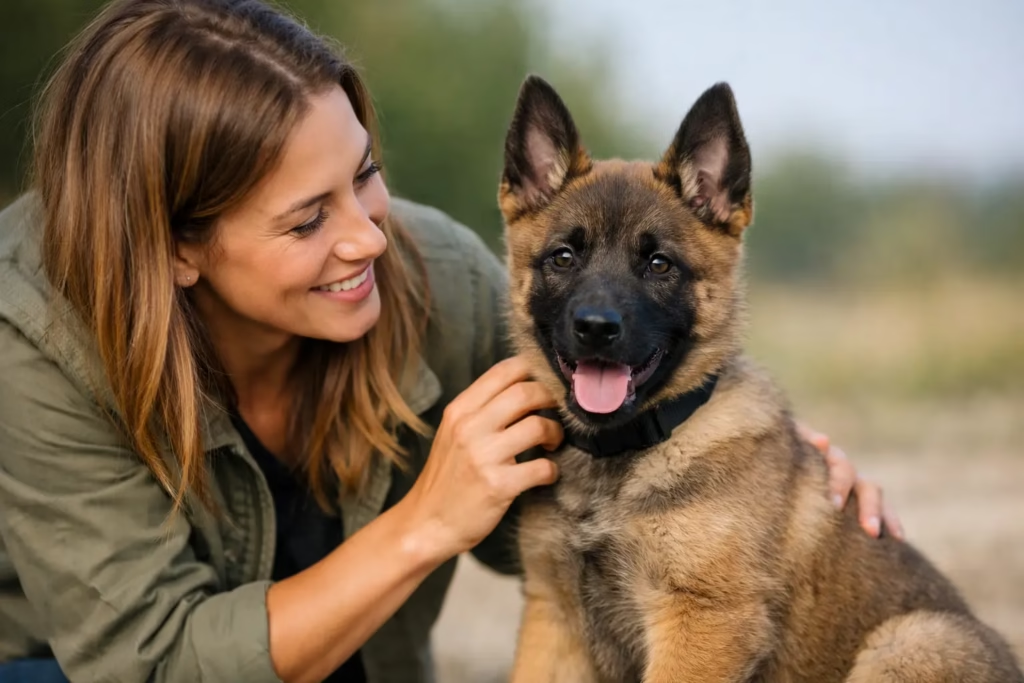
A Belgian Malinois puppy may look like a bright-eyed, athletic companion, but the top traits of Belgian Malinois puppies become clear quickly: they are observant, energetic, intensely people-focused, and ready to learn. For the right owner, those qualities create an exceptional relationship. For an unprepared home, they can become overwhelming.
This is not a breed chosen simply for appearance or reputation. Belgian Malinois puppies need purposeful daily involvement, fair training, and an owner who understands that their mental needs are every bit as real as their need for exercise. Knowing what to expect before bringing home a puppy is one of the best ways to build a confident, stable adult dog.
Intelligence That Requires Direction
Belgian Malinois are known for their quick minds. Puppies often recognize patterns, learn household routines, and connect actions with outcomes sooner than many owners expect. This intelligence makes them highly trainable, but it also means they notice inconsistency.
A puppy that is allowed to jump on visitors one day and corrected for it the next will not understand the rule. A puppy given no structured outlet may create its own entertainment by chewing, chasing, barking, or testing boundaries. Clear expectations and reward-based training help direct that intelligence toward useful behavior.
Short, frequent training sessions are usually more productive than long, repetitive drills. A young Malinois can learn engagement, recall, place work, leash foundations, crate comfort, and basic obedience while still enjoying time to rest, explore, and be a puppy. The goal is not to rush maturity. It is to establish communication and good habits early.
High Energy and Natural Drive
Among the defining top traits of Belgian Malinois puppies is a level of energy that requires an active plan. Many puppies are eager to chase movement, carry toys, explore new spaces, and stay involved in whatever their people are doing. This natural drive is part of what makes the breed capable in sport, obedience, detection, service, and working environments.
However, exercise alone is not the answer. Endless fetch or forced physical activity can create a puppy that is fitter without becoming calmer or more balanced. Young dogs need age-appropriate activity that protects developing joints and teaches them how to settle after excitement.
A healthy routine may include supervised play, walks suited to the puppy’s age, basic obedience, food puzzles, scent games, and structured interaction with the family. Just as important is teaching an off switch. A Malinois puppy should learn that time in a crate, on a bed, or quietly beside its owner is part of normal daily life.
Strong Attachment and Loyalty
Belgian Malinois commonly form deep bonds with their families. Many want to be close, watchful, and included in daily routines. This loyalty can be one of the breed’s most rewarding characteristics, especially for owners who want a responsive partner rather than a detached dog.
That same attachment should be developed carefully. A puppy needs affection and engagement, but it also needs confidence when separated from its owner. Crate training, calm independent play, and gradual practice being alone for short periods can help prevent unhealthy dependence.
Well-raised Malinois are not simply dogs that follow commands. They are often highly tuned in to their handler’s voice, body language, and emotional energy. Calm, consistent leadership helps a sensitive, people-oriented puppy feel secure.
Confidence Is Different From Reactivity
A sound Belgian Malinois puppy should be curious and environmentally stable, not reckless or shut down. Confidence may show up as a willingness to investigate a new surface, recover after an unexpected sound, engage with a toy, or look to a trusted handler for guidance in an unfamiliar setting.
Prospective owners should understand that confidence is not the same as constant intensity. A puppy that cannot settle, reacts strongly to every distraction, or appears unable to recover from stress may need more than basic training. Responsible breeders pay close attention to temperament because stable nerves and appropriate recovery matter in family, sport, and working homes.
Early socialization supports this development, but socialization is more than meeting as many strangers and dogs as possible. Quality matters. A puppy benefits from positive, controlled exposure to different people, surfaces, sounds, vehicles, environments, and handling experiences. Overwhelming a young puppy with chaotic activity can be counterproductive.
Athletic Structure and Physical Awareness
Belgian Malinois are built for movement. Even as puppies, many show coordination, speed, and a natural willingness to climb, run, turn, and engage physically with their surroundings. Proper structure supports the active life this breed is often asked to live.
Because they grow quickly, puppies should not be expected to perform repetitive jumping, long-distance running, or high-impact work. Their enthusiasm can exceed what their developing bodies are ready to handle. A responsible owner manages activity while allowing appropriate play and movement.
Nutrition, veterinary care, and sensible exercise all contribute to healthy development. When selecting a puppy, ask about the parents’ health evaluations, documented lineage, and the breeder’s approach to breeding for sound structure as well as temperament. AKC registration documents pedigree, while health-focused breeding decisions help provide a stronger foundation for the future.
A Strong Need for Training and Boundaries
Belgian Malinois puppies are not difficult because they are inherently bad dogs. They are demanding because they are capable, energetic, and quick to learn both desired and undesired behavior. Training is not an optional extra for this breed. It is part of responsible ownership.
Early training should be fair, clear, and consistent. Puppies need to learn how to greet people appropriately, walk on leash, respond when called, settle in the home, and handle being touched for grooming and veterinary care. They also need rules around biting, play, food, and household access.
Owners interested in protection sports or advanced working training should avoid trying to create adult behavior in a baby puppy. Strong foundations come first: engagement, obedience, environmental confidence, impulse control, and a positive relationship with the handler. The right professional guidance can make a meaningful difference, particularly for first-time Malinois owners.
Not Every Home Is the Right Match
A Belgian Malinois can thrive with an active family, an experienced dog owner, a sport handler, or a working-dog enthusiast. The best home is not defined only by a large yard or an athletic lifestyle. It is defined by time, consistency, structure, and a real willingness to train.
A fenced yard can be useful, but it does not replace interaction or mental work. Likewise, an owner who jogs daily may still find the breed challenging if they do not enjoy training and managing a dog with strong working instincts. Families with children can be successful when adults supervise interactions, set clear boundaries, and make the puppy’s training a household priority.
This is why breeder-guided placement matters. At Black Rose Malinois, matching a puppy to the right home involves more than selecting a color, sex, or the first available puppy. The puppy’s temperament, energy level, and potential should be considered alongside the buyer’s experience, goals, and daily environment.
What Responsible Breeding Adds to the Equation
No breeder can promise that every puppy will develop in exactly the same way. Genetics, early development, training, health care, and the owner’s choices all shape the adult dog. Still, responsible breeding provides a meaningful starting point.
Carefully selected AKC-registered parents, appropriate health evaluations, stable temperaments, and sound structure are important considerations. Daily handling and early socialization also help puppies begin life with positive experiences and familiarity with people.
A reputable breeder should be willing to discuss both the strengths and the responsibilities of the breed. Honest guidance is a trust signal, not a barrier to a sale. Buyers should expect questions about their lifestyle, training plans, prior dog experience, and goals for the puppy.
A Belgian Malinois puppy can become a remarkable family companion, training partner, or working prospect when its natural traits are understood and given the right direction. Choose the puppy and breeder with the same care you plan to bring to the years ahead.