
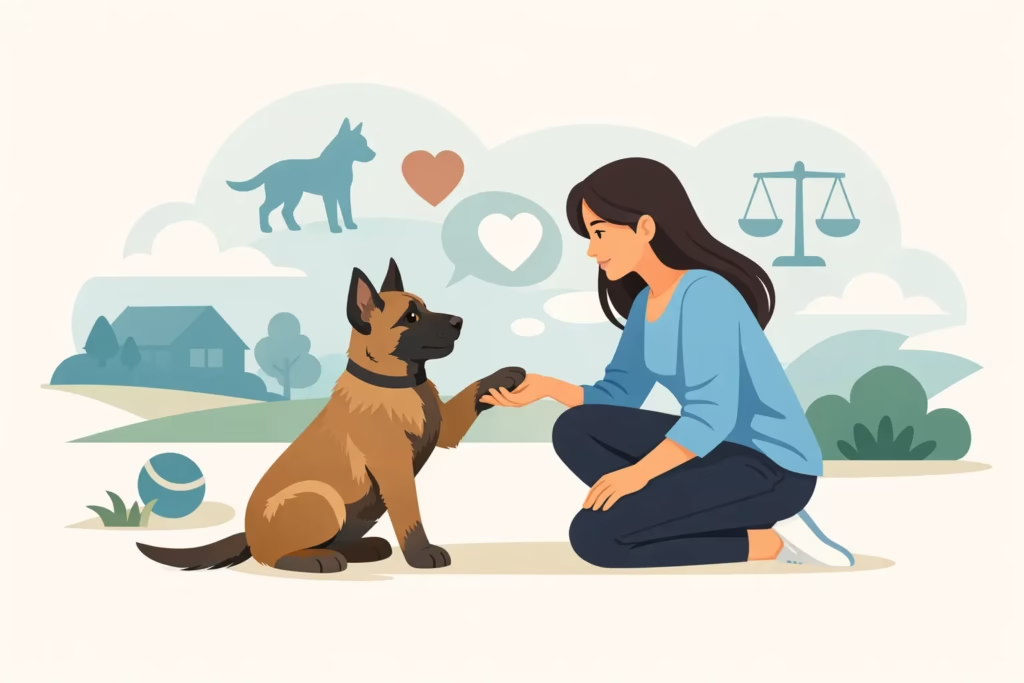
A Belgian Malinois puppy can be alert and affectionate one moment, then ready to chase, tug, climb, or investigate every movement the next. That intensity is central to Belgian Malinois puppy temperament. It is also why the breed can become an exceptional companion, sport dog, or working partner in the right home – and an overwhelming match in the wrong one.
A well-bred Malinois puppy should not be judged only by how bold, busy, or cute it appears during a visit. Temperament is shaped by genetics, early development, health, socialization, handling, and the environment the puppy enters after placement. Responsible buyers look at the complete picture.
What Belgian Malinois Puppy Temperament Looks Like
Belgian Malinois are intelligent, highly aware dogs developed for work. Puppies often show this early through fast learning, strong interest in people and movement, and a willingness to engage with toys, food, and new challenges. Many are naturally energetic and have a pronounced desire to interact with their environment rather than quietly watch it.
This does not mean every puppy in a litter acts the same. One may be more socially forward, another more observant, and another especially persistent with a toy. A thoughtful breeder recognizes those differences and uses them to guide placement. A puppy suited for a serious sport or working home may not be the same puppy best suited for an active family committed to training.
Healthy confidence is one of the qualities prospective owners should value. A confident puppy can notice an unfamiliar sound, surface, person, or object without becoming overwhelmed. Confidence is not reckless behavior. The goal is a puppy that recovers quickly, remains curious, and can accept direction from its handler.
Drive Is a Strength, Not a Substitute for Stability
The word “drive” is often used when discussing Malinois, but it can mean different things. Prey drive may appear as enthusiasm for a moving toy. Food drive can make training especially efficient. Possession, hunt drive, and willingness to work with a handler may also be important in sport and performance prospects.
Drive is valuable because it gives owners something productive to build on. A puppy that enjoys a tug toy, eagerly searches for food, or wants to engage with its person can be taught obedience, recall, agility foundations, scent work, and household manners through rewarding training.
However, high drive alone does not equal good temperament. An excellent Belgian Malinois should also have clear nerves, environmental stability, and the ability to settle after activity. A puppy that is constantly frantic, unable to recover from normal stress, or excessively reactive needs careful evaluation. Responsible breeding considers balance, not simply the highest possible energy level.
For family homes, the practical question is not whether a puppy is energetic. It is whether the household can give that energy a structured outlet every day. For working and sport homes, the question becomes whether the puppy has the traits, resilience, and trainability needed for the owner’s specific goals.
Early Socialization Shapes the Adult Dog
A puppy’s first weeks create a foundation, but early socialization should never be confused with exposing a puppy to everything at once. Quality matters more than quantity. Thoughtful early experiences teach puppies that normal sights, sounds, surfaces, handling, and short periods of separation can be safe and manageable.
Daily handling helps puppies become comfortable with being touched, examined, and guided by people. This matters later for grooming, veterinary care, nail trims, travel, and everyday family life. Age-appropriate introductions to novel but controlled environments can also help develop curiosity and recovery.
Once a puppy goes home, the owner takes over this process. Socialization should be calm, intentional, and positive. A Malinois puppy does not need to greet every stranger or play with every dog. In fact, teaching neutrality is often more useful than encouraging constant excitement around people and animals.
Good socialization includes teaching the puppy to look to its owner for direction. A short outing where the puppy practices calm observation, checks in with the handler, and returns home successful is often more valuable than a chaotic public experience.
Training Needs Start Immediately
Belgian Malinois puppies learn quickly, including lessons owners did not intend to teach. If biting hands gets a lively reaction, if jumping earns attention, or if barking at the window becomes a daily habit, those behaviors can become established fast. Clear, consistent boundaries from the first day are kind and necessary.
Training should begin with simple skills: name recognition, engagement, recall, crate comfort, leash introduction, place work, handling, and settling quietly. Short sessions work best. A young puppy does not need exhausting drills, but it does need frequent opportunities to think, succeed, and learn that cooperation is rewarding.
Physical exercise matters, but it should not be the only answer to Malinois energy. Repetitive forced exercise is not appropriate for a growing puppy, and simply trying to “wear out” a high-drive dog can create an even fitter dog with no off switch. Mental work, structured play, rest, and age-appropriate activity create a more balanced routine.
Puppy mouthing is also common in this breed. Malinois puppies often use their mouths enthusiastically during play and exploration. Owners should redirect to appropriate toys, avoid rough games that encourage grabbing people, and consistently reward calm behavior. Early guidance makes a meaningful difference as the puppy grows stronger and more coordinated.
Is a Belgian Malinois Right for Your Home?
The best Malinois homes are not necessarily those with the biggest yards. A large yard does not replace training, supervision, and meaningful work with the owner. The breed generally thrives with people who enjoy being involved in their dog’s development and can provide daily structure.
An active family may be a strong match when the adults understand the breed, children are taught respectful interactions, and the puppy has consistent rules. A Malinois can be deeply loyal and affectionate with its family, but it is not typically a low-maintenance dog that will be content with occasional exercise and little direction.
Experienced dog owners, sport handlers, and working-dog homes may be looking for specific traits such as intensity, toy engagement, environmental confidence, or strong trainability. These goals should be discussed honestly with the breeder. No responsible breeder should promise that an eight-week-old puppy will become a finished protection, competition, or service dog. Potential can be evaluated, but development depends heavily on training, maturity, health, and the life the dog is given.
Buyers should also consider their schedule. Young puppies need supervision, frequent bathroom breaks, safe exposure to the world, and consistent routines. Adolescence can be especially demanding as confidence and physical ability increase. This is not a breed to purchase because it looks impressive online or because it is known for protection work.
How Responsible Breeding Supports Temperament
Temperament begins before puppies are born. Selecting parent dogs with sound character, stable nerves, functional structure, and appropriate working ability helps create a stronger foundation. Health evaluations and documented lineage matter as well, because long-term soundness supports a dog’s ability to train, work, and enjoy an active life.
A responsible breeder also watches puppies as individuals. Early observations can reveal who is more people-focused, more independent, more playful, more thoughtful, or more intense. These observations are not labels that permanently define a puppy, but they are useful information for thoughtful placement.
At Black Rose Malinois, responsible placement means discussing what a buyer wants, what experience they have, and what daily life will look like after the puppy comes home. The right match protects both the puppy and the owner. It gives a promising Malinois the structure needed to become the confident, engaged dog it has the potential to be.
The most rewarding Belgian Malinois relationships are built with realistic expectations. Choose a puppy for more than its appearance or energy, commit to training before the puppy arrives, and give it a clear job in your life – even if that job is being a well-mannered, active companion who learns alongside you every day.