
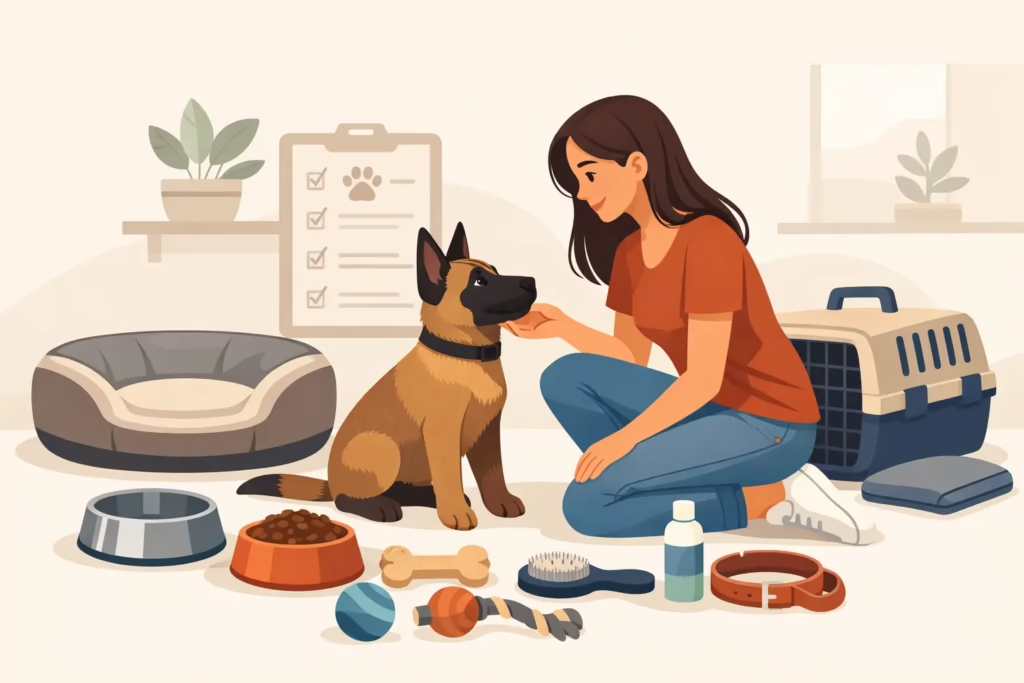
A Belgian Malinois puppy can be alert, athletic, and ready to engage from the moment they come home. Learning how to prepare for a Belgian Malinois puppy means preparing for more than feeding schedules and a comfortable bed. You are welcoming a highly intelligent working breed that needs clear direction, daily involvement, and an owner who values training as part of everyday life.
The right preparation protects the puppy’s development and gives your household a more confident start. Before choosing a puppy, be honest about your time, experience, activity level, and willingness to maintain structure well beyond the first few months.
Understand What a Belgian Malinois Needs
Belgian Malinois are often admired for their loyalty, focus, athleticism, and trainability. Those same qualities can become difficult when a puppy has too little exercise, inconsistent rules, or no appropriate outlet for their mind. This is not a breed that should be expected to entertain itself in a backyard or remain content with occasional walks.
A young Malinois needs frequent, age-appropriate activity, short training sessions, social exposure, rest, and connection with its people. The goal is not to keep a puppy physically exhausted. Too much repetitive running, jumping, or forced exercise can be hard on developing joints and may create an overly aroused puppy. Instead, build a balanced routine that includes calm engagement, basic obedience, supervised exploration, and plenty of sleep.
Consider whether your lifestyle supports that routine. An active family can be an excellent fit when adults are committed to training and supervision. Sport, obedience, scent work, and working-dog homes may offer natural outlets for the breed. First-time owners are not automatically excluded, but they should be especially prepared to work with an experienced trainer and follow breeder guidance from the beginning.
Prepare Your Home Before Puppy Day
A well-prepared home prevents many common puppy problems. Belgian Malinois puppies are curious, quick, and often more determined than owners expect. Puppy-proofing should be thorough rather than casual.
Secure electrical cords, medications, cleaning products, food, shoes, children’s toys, and anything small enough to chew or swallow. Use covered trash cans and check that gates, doors, and fences latch reliably. If you have a yard, inspect it for gaps, toxic plants, sharp objects, and areas where a small puppy could squeeze through. A fence is valuable, but it does not replace supervised outdoor time or structured exercise.
Set up a quiet resting area before arrival. A properly sized crate can support house training, safe management, travel, and the puppy’s ability to settle. Introduce it as a calm, positive place, never as punishment. Include comfortable bedding only if the puppy is not likely to shred or ingest it, and provide a safe chew appropriate for the puppy’s age.
You will also benefit from having a puppy gate or exercise pen. These tools create safe boundaries while allowing the puppy to be near family activity. Management is not a substitute for training, but it prevents unwanted habits from becoming routine while the puppy is learning.
Choose Your Support Team Early
Do not wait for a behavior problem to start looking for help. Before your puppy comes home, identify a veterinarian familiar with active, working breeds and schedule an initial wellness visit according to your breeder’s recommended timeline. Bring the puppy’s health records, vaccination information, and feeding details so your veterinarian can help you continue an appropriate care plan.
Also research qualified trainers in your area. Look for someone who understands Belgian Malinois development and uses clear, fair, skill-based methods. A good trainer should help you build engagement, communication, impulse control, recall, leash skills, and neutrality around distractions. Training for a Malinois is not limited to correcting problems. It is the foundation for a stable adult dog that can participate safely in family life, sport, or work.
For owners pursuing protection, competition, or performance work, choose instruction carefully. Early development should focus on confidence, obedience, environmental stability, and a strong relationship with the handler. Serious working training should be guided by qualified professionals and suited to the individual dog’s maturity and temperament.
Build a Realistic Daily Routine
Puppies thrive when the day is predictable. A dependable rhythm makes house training easier and teaches the puppy when to play, eat, train, rest, and go outside. In the first weeks, plan for frequent potty breaks, including after waking, eating, drinking, playing, and naps.
A simple routine can include a morning potty break, a few minutes of engagement and basic training, a meal, then quiet rest. Repeat short activity periods throughout the day rather than relying on one long session. Puppies need significant sleep, and a Malinois that becomes frantic or mouthy is often overtired, overstimulated, or both.
Everyone in the household should use the same cues and rules. Decide in advance whether the puppy is allowed on furniture, where it sleeps, which rooms are off-limits, and how children will interact with it. Mixed messages are especially challenging for an observant breed that quickly learns which person has different expectations.
Focus on Skills That Matter at Home
Start with practical behaviors that make daily life easier. Teach the puppy to respond to its name, come when called, follow a food lure, accept gentle handling, settle in a crate, and walk beside you for short periods without pulling. Reward the behaviors you want repeated, including calmness.
Mouthing is normal in a young puppy, but it should be addressed consistently. Redirect to an appropriate toy, end rough play when teeth touch skin, and avoid encouraging hand wrestling. If children are present, adults should supervise every interaction. A Malinois puppy can become overstimulated quickly, and children should not be responsible for managing the puppy’s behavior.
Socialize With Purpose, Not Pressure
Socialization is not a race to introduce your puppy to every dog, person, store, and noisy event. It is the careful process of teaching the puppy that new environments, surfaces, sounds, people, and situations are safe and manageable. Quality matters more than quantity.
Provide brief, positive exposure to everyday life: calm visitors, car rides, different walking surfaces, household sounds, friendly adults, and well-managed outings. Let the puppy observe at a comfortable distance when needed. Do not force greetings or encourage strangers to overwhelm the puppy with touch and attention.
Dog interactions require the same judgment. Avoid chaotic dog parks, especially during early development. One stable, vaccinated adult dog or a well-run puppy class is usually more useful than a crowded, unpredictable setting. Your goal is a dog that can remain composed around other dogs, not one that believes every dog must become a playmate.
Plan for Exercise and Mental Work
A Belgian Malinois needs an outlet, but the best outlet changes as the puppy grows. Early on, prioritize play with you, short walks in safe areas, food puzzles, scent games, basic obedience, and supervised exploration. These activities build confidence and focus without asking too much from a growing body.
As your puppy matures, the level and type of activity can expand based on veterinary input, structure, temperament, and your goals. Some dogs may thrive in obedience, tracking, scent work, agility, dock sports, or other performance activities. Others may be happiest as active companions with consistent training and family involvement. The individual puppy matters as much as the breed label.
Avoid measuring success by how tired your dog looks. A puppy can learn to demand more and more physical activity without learning how to settle. Include calm behaviors in every day: resting in the crate, chewing quietly near the family, waiting at doors, and relaxing after an outing.
Start With a Responsible Breeder Relationship
Preparation also includes choosing a breeder who is honest about the breed and invested in the puppy’s future. Ask about AKC registration, parent health evaluations, temperament, structure, lineage, early handling, socialization, feeding, and the breeder’s placement process. A responsible breeder should want to learn about your household and goals, not simply promise that every puppy is right for every buyer.
At Black Rose Malinois, responsible placement begins with recognizing that each puppy and each home are different. Breeder guidance can help owners understand a puppy’s early routine, transition smoothly to a new environment, and make training decisions that support long-term success.
Bring home the supplies, schedule, and support system your puppy needs, but leave room to learn the dog in front of you. The most prepared Malinois owners are not those who expect perfection on day one. They are the ones who show up consistently, provide fair structure, and give their puppy a meaningful place in daily life.