
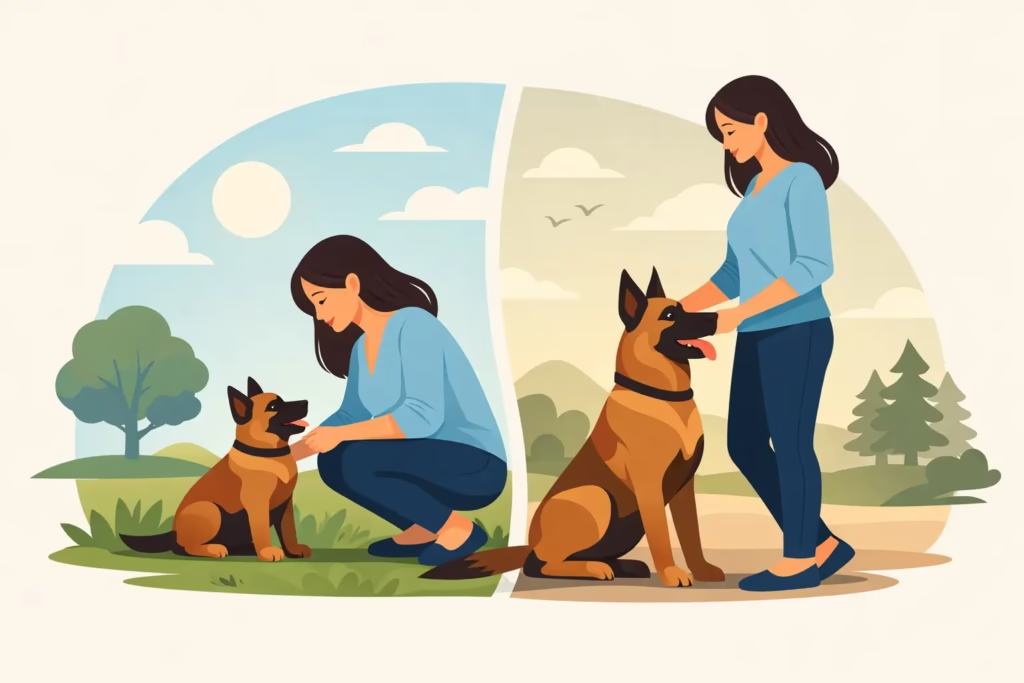
A Belgian Malinois puppy can look nearly full-grown before they have the judgment to match. So, how long is a Belgian Malinois a puppy? In the most practical sense, expect puppyhood through about 12 months, followed by a demanding adolescent period that often lasts until 18 to 24 months. Full physical and mental maturity may not arrive until age 2 or 3.
For prospective owners, that timeline matters. The Malinois is an intelligent, athletic working breed with a strong desire for engagement. A 10-month-old dog may have the size, speed, and confidence of an adult while still needing the structure, supervision, and patient training of a young dog. Understanding each stage helps families and handlers set fair expectations from the beginning.
How Long Is a Belgian Malinois a Puppy?
Veterinarians and breeders commonly consider a dog a puppy from birth through its first birthday. During that first year, a Belgian Malinois changes quickly in body, behavior, and learning ability. The puppy stage includes several distinct periods, and each one calls for a slightly different approach from the owner.
After the first birthday, your Malinois is no longer a puppy by age, but that does not mean they are finished developing. Most enter adolescence around 6 months and remain mentally immature well into their second year. This is often the stage when owners realize why thoughtful breeding, early socialization, and consistent training matter so much.
Individual development varies. Genetics, nutrition, exercise, training, health, and the dog’s natural temperament all influence how quickly a Malinois settles into adult behavior. A focused, steady puppy may appear mature early, while a higher-drive dog may stay more impulsive and intense for longer. Neither is automatically better. The goal is to understand the dog in front of you and provide appropriate guidance.
Belgian Malinois Growth Stages at a Glance
Birth to 8 weeks: Early foundation
The earliest weeks are shaped by the breeder. Puppies learn from their mother, littermates, daily handling, and carefully managed exposure to normal sights, sounds, and surfaces. This is a critical time for building confidence and social skills without overwhelming the litter.
Responsible breeders pay close attention to health, cleanliness, temperament development, and individual puppy behavior during this period. Puppies should remain with their mother and littermates until they are developmentally ready to transition to their new homes. Early separation can interfere with important learning, including bite inhibition and canine communication.
8 to 16 weeks: The prime learning window
Most Belgian Malinois puppies go home at approximately 8 weeks of age. From then through about 16 weeks, their experiences can have a lasting impact. This does not mean exposing a puppy to every possible situation all at once. It means introducing the world gradually, positively, and with good judgment.
A young Malinois should learn that people, household activity, travel, grooming, crate time, different surfaces, and calm exposure to new environments are normal parts of life. Short training sessions can begin immediately. Name recognition, recall, leash introduction, settling in a crate, food motivation, and basic engagement games create a useful foundation.
This is also the period when owners need to protect the puppy from preventable risks. Avoid dog parks, uncontrolled interactions with unfamiliar dogs, excessive jumping, and long forced walks. A growing puppy needs movement and play, but their joints, coordination, and attention span are still developing.
4 to 6 months: The bold, busy youngster
Between 4 and 6 months, many Malinois puppies become more energetic, more curious, and more likely to test household rules. Teething is often in full swing. Chewing, grabbing, and mouthy play are normal breed tendencies, but they still need clear, calm direction.
Provide legal outlets for chewing and carrying, then redirect unwanted behavior before it becomes a habit. This is not a breed that does well with inconsistent rules. If jumping on guests, chasing children, or biting sleeves is sometimes allowed and sometimes corrected, the puppy receives mixed information.
Training should remain upbeat and brief, but expectations can grow. Work on polite greetings, leash manners, recall around mild distractions, a reliable place command, and settling after activity. The ability to turn off is just as valuable as enthusiasm for work.
6 to 12 months: Adolescence begins
This is the stage that surprises many otherwise prepared owners. A Belgian Malinois at 8 or 10 months may be tall, powerful, and physically impressive, yet their impulse control can disappear when excitement rises. They may challenge boundaries, become selectively responsive, or show a sudden increase in environmental awareness.
Adolescence is not a reason to become harsh or abandon training. It is a reason to become more consistent. Continue structured social exposure, reward correct choices, manage situations that are beyond the dog’s current skill level, and avoid allowing rehearsal of unwanted behaviors.
For active homes, this is also when exercise needs increase. However, more physical activity alone is not the answer. An under-stimulated Malinois can be difficult, but an over-aroused Malinois can be difficult too. Balance physical conditioning with obedience, scent work, food puzzles, controlled tug play, tracking, sport foundations, or other mentally engaging work suited to the individual dog.
When Does a Belgian Malinois Reach Full Size?
Many Belgian Malinois reach most of their adult height between 10 and 14 months. They often continue filling out, adding muscle, and developing adult structure through 18 months or longer. Males may take somewhat longer than females to mature physically, although size and development vary by bloodline and individual.
A dog that looks adult is not necessarily ready for adult-level physical demands. Repetitive high-impact jumping, long-distance running, and intense conditioning should be introduced thoughtfully as the dog matures. Your veterinarian can help you make decisions based on your puppy’s growth, body condition, and overall health.
Nutrition also deserves careful attention. Feed a quality diet appropriate for a growing medium-to-large, athletic dog and keep the puppy lean rather than heavy. Extra weight adds unnecessary stress to developing joints. Regular veterinary care, appropriate vaccination planning, and parasite prevention support healthy development from the start.
Mental Maturity Takes Longer Than Physical Growth
Most Belgian Malinois do not reach dependable emotional maturity at 12 months. Many begin showing a more stable adult temperament between 18 months and 3 years. Working-drive dogs, in particular, may remain intensely energetic and environmentally engaged as young adults.
This is not a flaw in the breed. It is part of what makes a well-bred Malinois capable of excelling in obedience, sport, scent work, service roles, and other demanding activities. The trade-off is that this intelligence and drive require an owner who enjoys training and can provide daily structure.
A mature Malinois should not be expected to be inactive or detached. Even an adult dog benefits from purposeful exercise, mental work, and clear communication. What changes with maturity is often the dog’s ability to focus, recover from excitement, make better choices, and settle more easily when properly trained.
Signs Your Malinois Is Moving Beyond Puppyhood
There is no single birthday that flips a puppy into a finished adult. Instead, owners usually notice a gradual shift. The dog may develop more consistent focus during training, recover faster after exciting events, show better impulse control, and settle more reliably at home.
Physically, the lanky puppy build begins to look more balanced and muscular. Behaviorally, some dogs become more serious or more selective in how they approach unfamiliar people, dogs, and environments. This is one reason continued socialization and responsible handling remain valuable after the early puppy months.
If behavior changes suddenly or dramatically, do not assume it is simply adolescence. Pain, illness, fear, and stress can affect behavior at any age. Consult a veterinarian or a qualified trainer when concerns arise, especially with guarding, fearfulness, reactivity, or aggression.
Preparing for the Full Commitment
A Belgian Malinois is a puppy for roughly one year, but the commitment to guiding a young Malinois lasts much longer. Prospective owners should plan for at least two years of active training, managed socialization, exercise, and maturity-building before expecting a fully reliable adult dog.
That commitment begins with careful placement. At Black Rose Malinois, matching a puppy’s temperament and potential to the right home is part of responsible breeding. An active family may need a confident puppy with an off-switch, while a sport or working home may be prepared for a more intense prospect. AKC registration, health-focused breeding decisions, and early handling all provide a stronger starting point, but the owner’s follow-through shapes the adult dog.
The best approach is to enjoy the puppy stage without rushing past it. Give your Malinois clear rules, meaningful work, proper rest, and patient guidance, and you will be building the stable partnership this remarkable breed is capable of providing.